

Reading Time: Approx. 9minutes | Category: Electrical Installation & Upgrades | Audience: Electricians & Contractors
In solar PV systems, protection is not optional—it’s critical. Choosing the wrong device can lead to system failure, difficult maintenance, and significant safety risks.
In solar PV systems, protection is not optional—it's critical. Both fuses and circuit breakers protect against overcurrent and short circuits, but choosing the wrong one can lead to system failure, difficult maintenance, and safety risks. In most solar setups, protection is installed at key points like: panel → charge controller, controller → battery, battery → inverter.
Whether you are designing a small off-grid cabin or a commercial solar array, understanding the distinct roles of these two components is essential for a safe, code-compliant installation.
1. What Do Fuses and Circuit Breakers Actually Do?
2. Fuse vs Circuit Breaker: Key Differences
3. Where to Use Fuses in a Solar PV System
4. Where to Use Circuit Breakers in Solar Systems
5. Electrician Pain Points: Choosing the Wrong Protection
6. Best Practice: Why Most Solar Systems Use BOTH
7. How to Choose the Right Protection
8. Common Mistakes Electricians Should Avoid
9. Final Thoughts: Which One Do You Need?
They stop excessive current flow and protect wiring and equipment from overheating and damage. In solar systems, these devices are the last line of defense between a fault and a catastrophic failure, such as a cable fire or a destroyed inverter costing thousands of dollars.
Solar systems use DC (Direct Current). DC arcs are fundamentally harder to extinguish than AC arcs because AC naturally crosses zero voltage 50-60 times per second (allowing the arc to self-extinguish), while DC current is continuous.
Learn More:
Essential Protection Devices in Solar Power Systems
⚠️ Critical Safety Warning:
Protection devices MUST be DC-rated. Using an AC-rated breaker in a DC solar system is a serious safety hazard. The internal mechanism may weld shut or catch fire when trying to interrupt a DC fault.
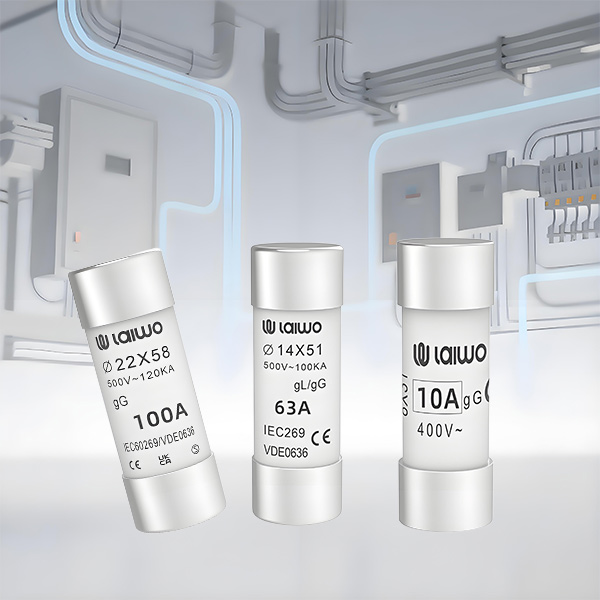
A fuse contains a metal element (usually silver or copper alloy) that melts when current exceeds its rating. This is a one-time operation — the fuse must be physically replaced after blowing. The speed of response is extremely fast, often faster than any electromechanical device.
Learn Mroe:
Fuse Symbols in Electrical Systems
What is the difference between a fuse and a MCB?
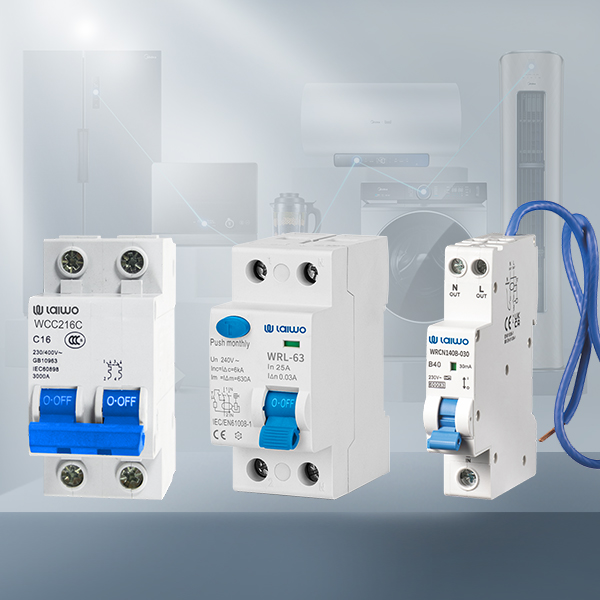
A circuit breaker uses a thermal-magnetic mechanism. A thermal element handles sustained overloads (bimetallic strip bends with heat), while a magnetic element handles sudden short circuits (solenoid triggers instantly). After tripping, it can be reset with a simple lever movement.
Learn More: MCBs Guide: Types, Functions & Electrical Safety Tips
| Feature | Fuse | Circuit Breaker |
|---|---|---|
| Resettable | No (Must Replace) | Yes |
| Response Speed | Very Fast (Microseconds) | Fast (Milliseconds) |
| Cost | Low Upfront | Higher Upfront |
| Maintenance | Replacement Required | Simple Reset |
| DC Rating | Yes (Standard) | Must Verify DC-Rated |
| Best Use | String Protection, Batteries | Main Disconnects, Control |
| Fault Visibility | Not Always Obvious | Clear ON/OFF Indicator |
Key Insight:
In solar systems, fuses react faster to faults and are better for protecting sensitive electronics. Breakers are better for operation, maintenance, and system isolation.
When multiple PV strings are connected in parallel, reverse current can flow from healthy strings into a faulty one. String fuses (typically 10–15A per string) prevent this. Each string should have its own fuse for individual fault isolation.
Combiner boxes aggregate multiple strings. Each string input is typically fused. This ensures that a fault on one string doesn't cascade to the entire array. String fuses here are rated based on the panel's Isc (short-circuit current) × 1.56 safety factor per NEC/IEC standards.
Batteries are capable of delivering enormous discharge currents — far beyond what any cable can handle. A battery fuse (often 100A–400A class T or mega fuse) protects the entire DC bus. This is arguably the most critical single protection point in any off-grid or hybrid solar system. Fuses are preferred here for their extremely fast response.
This is the ideal location for a DC circuit breaker. It serves a dual purpose: overcurrent protection AND a manual disconnect switch. Electricians use this to safely isolate the inverter for servicing without needing to remove any wiring.
On the AC output side of the inverter, standard AC circuit breakers (MCBs) are used — same as conventional electrical panels. These protect the load circuits: lighting, sockets, HVAC.
Circuit breakers solve a major electrician pain point: quick system shutdown. With a breaker, an installer can de-energize sections of the system in seconds. This is critical for solar because panels continue generating power during the day even when the inverter is off.
A solar system protected only by fuses is vulnerable to extended downtime. If a string fuse blows during a weekend or at a remote off-grid site, and no spare fuse is on hand, the system is offline until a replacement arrives. For commercial sites, this can mean significant energy and revenue loss.
Unlike a circuit breaker with a clear ON/OFF indicator, a blown fuse is not always visually obvious. Electricians must carry a multimeter and test each fuse individually. In a combiner box with 10+ strings, this becomes time-consuming and frustrating.
This is a critical safety issue. Using a standard AC MCB in a DC solar application is extremely dangerous. AC breakers are not designed to interrupt DC arcs. The arc can sustain inside the breaker, leading to internal fire or explosion.
Poor selectivity design means when a fault occurs on a sub-circuit, the main breaker trips instead of the sub-circuit fuse — taking down the entire system instead of isolating the fault. Proper discrimination between protection devices is essential.
Learn More:
AC vs DC MCBs: How to Choose the Right Circuit Breaker
Can AC MCB Be Used in DC Systems? Technical In-Depth Analysis
Fuses are placed at high-risk, fast-fault locations: string inputs, battery terminals. Their microsecond response protects expensive components from even brief fault current spikes.
Breakers are placed at operational control points: battery-to-inverter link, main DC disconnect, AC distribution board. They are reset-friendly and provide the system isolation capability that makes maintenance safe and efficient.
A well-designed solar protection scheme looks like this:
PV String: String Fuse (in combiner box)
Combiner Box → Charge Controller: DC Fuse or MCB
Battery Bank → Main DC Bus: High-current Class T Fuse
Battery → Inverter: DC Circuit Breaker (dual function: protection + isolation)
Inverter AC Output → Load Panel: AC MCBs / RCBOs
This combination provides maximum safety AND maximum usability.
For string fuses: size at 1.56 × Isc of the PV module per NEC 690.8. For battery fuses: size to match the maximum discharge current of the battery bank and cable rating. Always consider continuous current capacity, not just peak.
A 24V system uses very different protection than a 48V or a 600V utility-scale system. Always check: the voltage rating of the fuse or breaker must EQUAL or EXCEED the system's maximum open-circuit voltage (Voc × 1.25 safety factor).
Small off-grid cabin (12V/24V): Fuse-heavy design, simple and cost-effective.
Residential hybrid system (48V): Combination of fuses + DC breakers.
Commercial/industrial (400V–1000V DC): Certified DC MCBs + string fuse arrays.
Learn More:
Breaking Capacity of Circuit Breakers: MCB, RCBO & RCCB Guide
Understanding 1-4 Pole Circuit Breakers: A Comprehensive Guide
The single most dangerous mistake. Always verify the DC voltage rating. A breaker labeled "250V" on a 48V DC circuit may work in some cases, but the risk of arc failure under DC is real and unpredictable.
A 100A fuse protecting a cable rated for 30A provides essentially NO protection. The cable will burn long before the fuse responds. Protection must be sized to the cable's current-carrying capacity, not the load's maximum possible draw.
Conversely, undersizing leads to false trips during high-current events like battery charge acceptance peaks or inverter startup surges. Causes system instability and customer complaints.
IEC 60269 for fuses, IEC 60947-2 for circuit breakers. NEC Article 690 for solar PV systems in the US. Non-compliance = insurance voidance + inspection failure + safety liability.
Learn More: Why Certifications Matter for Distribution Boxes, Breakers, and Fuses
Use fuses when:
Fast protection is critical (string-level, battery terminal).
Protecting sensitive DC circuits against fault current spikes.
Cost efficiency is a priority in distributed protection points.
Use circuit breakers when:
You need operational control and reset capability.
System uptime and quick recovery matters.
Manual isolation for maintenance is required.
Best answer: Most solar systems need BOTH — fuses for fast, fail-safe protection at critical nodes, and circuit breakers for operational control and fault recovery. The best solar installers and B2B procurement teams think in terms of protection architecture, not just individual devices.
DC-Rated Only: Never use AC-rated protection in DC solar circuits. Arc risk is real and dangerous.
Fuses = Speed: Use at string inputs and battery terminals for fastest fault response.
Breakers = Control: Use at battery-inverter link and main disconnects for operational flexibility.
Both is Best: A hybrid protection scheme gives you safety + usability + maintainability.
Size Correctly: Always calculate based on Isc, Voc, and cable rating — not just convenience.
Follow Standards: IEC 60269, IEC 60947-2, NEC 690 — compliance is non-negotiable.