Next: How to Replace an Old Fuse Box with a Modern RCBO Distribution Board



Reading Time: Approx. 7 minutes | Category: Electrical Installation & Upgrades | Audience: Electricians & Contractors
There is a fundamental misunderstanding among many residential and commercial building owners regarding the function of a circuit breaker. Often, users view the distribution board as a mere control panel. However, for the professional electrician, the distinction is clear: A circuit breaker is designed to trip only when something is catastrophically wrong, not during normal operation.
In a healthy electrical system, a tripped breaker should be a rare event. It signifies that the protection device has successfully intervened to prevent damage to the infrastructure or injury to personnel.
The Simple Rule of Thumb:
Occasional tripping usually indicates the protection system is working as intended against sporadic events.
Frequent tripping indicates an underlying electrical issue, whether it be a fault in the wiring, a defective appliance, or poor system design.
Circuit breakers trip to prevent overheating, fire, or electric shock, typically due to overloads, short circuits, or ground faults. Understanding why this happens infrequently is key to maintaining system integrity.
1. What a Circuit Breaker Is Designed to Do
2. Why Circuit Breakers Should NOT Trip Often
3. Real-World Installation Scenarios
4. Common Reasons Breakers Trip
5. Electrician Pain Points Behind Frequent Tripping
6. How Proper Design Keeps Breaker Trips Minimal
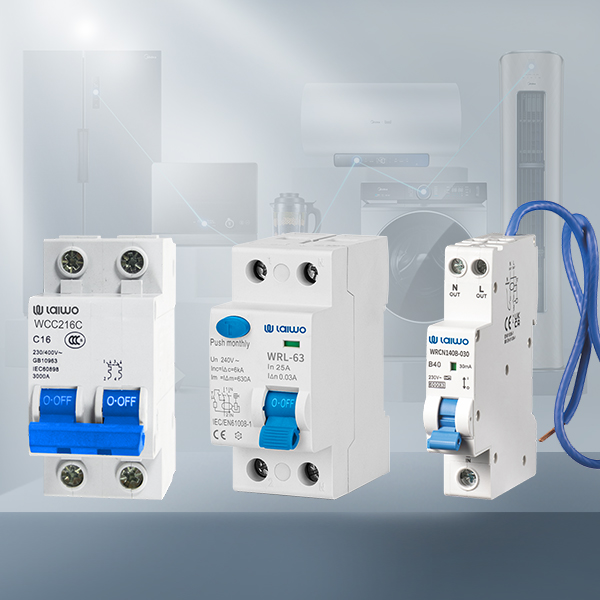
While breakers physically resemble switches and can be used to manually isolate power for maintenance, their primary function is automated protection. They are calibrated devices designed to automatically disconnect power when they detect electrical parameters that exceed safe limits. They protect:
Wiring: Preventing insulation from melting due to excess heat.
Equipment: Shielding sensitive motors and electronics from damaging currents.
Users: Mitigating the risk of electrocution and arc flashes.
Experienced electricians view breakers as "protection logic." They interpret the current flow and make a binary decision: safe or unsafe.
Learn More:
MCBs Guide: Types, Functions & Electrical Safety Tips
What Is the Difference Between a Circuit Breaker and a Main Switch Disconnector?
To understand why tripping is infrequent, one must understand the specific—and ideally rare—conditions that trigger it:
Overload (Most Common): Drawing more current than the circuit is rated for (e.g., 20A flowing through a 16A breaker) for a sustained period.
Short Circuit (Instant Trip): A direct contact between Live and Neutral or Live and Earth, causing a massive surge in current. Magnetic trip mechanisms handle this instantly.
Ground Fault / Leakage: Current leaking to earth, detected by RCDs/RCCBs to prevent shock.
Arc Fault: Dangerous sparking detected by modern AFDDs (Arc Fault Detection Devices).
In a professionally designed electrical installation, calculations are made to ensure that the expected load never exceeds the capacity of the cable or the protection device.
Circuits are sized with headroom (diversity factor).
Loads are distributed across different phases or circuits.
Breaker ratings are perfectly matched to the cable's current-carrying capacity.
Under these conditions, a breaker sits in the "closed" position for years, passing current without intervention. This silence is the hallmark of good design.
If a client complains that a breaker trips every Tuesday, or every time they cook dinner, the system is failing. Frequent tripping is a symptom, not a feature. It usually points to:
Overloaded circuits: The user has added more load than the original design accounted for.
Faulty wiring: Insulation breakdown causing intermittent shorts.
Defective appliances: An internal fault in a specific device plugged into the circuit.
⚠️ Important Electrician Insight:
No Tripping at All Can Also Be Dangerous.
A breaker that never trips, even when known faults have occurred, is a major liability. It may be mechanically seized, aged, or incorrectly sized (e.g., a 32A breaker protecting a cable rated for only 10A). Mechanical exercise of breakers during maintenance is crucial.
To contextualize this for B2B buyers and contractors, let's look at typical scenarios found on job sites.
Setup: Lighting and general sockets distributed according to code. Breaker sized correctly.
Result: Breaker may trip once or twice a year (or never). This is the ideal state.
Setup: High-draw appliances (Kettle + Microwave + Toaster) running simultaneously on one radial circuit.
Result: Breaker trips occasionally via the thermal mechanism. Requires circuit splitting.
Setup: A nail has nicked the insulation inside a wall, or moisture has entered an outdoor junction box.
Result: Breaker trips randomly, often influenced by humidity or vibrations. Requires insulation resistance testing.
Setup: Commercial HVAC or compressor with high inrush current.
Result: May cause nuisance tripping if the breaker curve (Type B vs Type C/D) is mismatched to the load profile.
Learn More:
Circuit Breaker for EV Charger – What You Need to Know
Overload is a thermal event. Inside the MCB (Miniature Circuit Breaker), a bimetallic strip heats up as current flows through it. If the current exceeds the rating, the strip bends and releases the latch. This takes time (inverse time characteristics). It happens occasionally because users don't run every appliance at maximum power 24/7. It is often seasonal (e.g., portable heaters in winter).
This is a magnetic event. A solenoid inside the breaker detects a massive spike (thousands of amps) and trips the mechanism in milliseconds. This is infrequent because it requires a physical failure of insulation or a direct wiring error.
Ground faults are often caused by moisture ingress (outdoor lights, bathroom fans) or physical damage to appliance cords. Since these factors are environmental or accidental, they happen sporadically.
Learn More:
RCCB Guide (Residual Current Circuit Breaker)
20 Amp Breaker: Replacement & Wattage Guide
Breaking Capacity of Circuit Breakers: MCB, RCBO & RCCB Guide
For the electrical contractor, a "nuisance tripping" call is often more complex than a standard installation.
Identifying an intermittent fault is difficult. It requires isolating appliances, testing multiple circuits, and sometimes waiting for the fault to reappear. This consumes billable hours that are hard to justify to clients who "just want the power back on."
Contractors often face frustration from clients saying, "Power keeps going off," or "Nothing is plugged in, but it trips." Managing these expectations requires educating the client that the breaker is doing its job—the problem lies elsewhere.
Frequently, the root cause is a legacy issue:
Wrong Breaker Rating: Previous installers may have undersized the breaker for the load.
Bad Load Distribution: All heavy loads clumped onto Phase A while Phases B and C are empty.
No Discrimination: The main breaker trips before the sub-circuit breaker, causing a total blackout instead of a localized one.
Minimizing trips starts at the design phase. B2B buyers and specifiers focus on these pillars of stable electrical infrastructure:
Load calculation is critical. By applying proper diversity factors, electricians ensure that normal peak usage does not approach the tripping threshold of the protective device.
Selecting the correct device is mandatory:
MCB (Miniature Circuit Breaker): For Overload & Short Circuit.
RCCB (Residual Current Circuit Breaker): For Earth Leakage/Shock protection.
RCBO (Residual Current Breaker with Over-Current): Combines both, offering the highest level of granular protection.
The modern trend in residential and commercial sectors is the extensive use of RCBOs per circuit. In older boards, one RCD might protect 5 circuits. If that RCD trips, half the building goes dark. With individual RCBOs, a fault on the toaster only trips the kitchen sockets, leaving the lights and fridge running. This drastically reduces the perception of "frequent tripping" by isolating the fault.
Learn More:
Why Electricians Install One RCBO Per Circuit
Understanding the Difference Between MCB, RCCB, and RCBO
There is a threshold where "annoying" becomes "dangerous." Immediate professional intervention is required if:
The breaker trips multiple times per week.
The breaker trips immediately upon resetting (hard fault).
The breaker is hot to the touch.
The breaker trips with no apparent load connected.
These signs indicate severe wiring degradation, a "bolted" short circuit, or a mechanical failure of the breaker itself.
The goal of any electrical installation is invisibility. The best electrical system is one the user never notices because it works seamlessly.
For electricians and facility managers, the narrative is clear: Occasional trips are proof that the protection logic is active and vigilant. Frequent trips are a distress signal from the infrastructure. By prioritizing proper load calculation, high-quality components, and modern circuit protection devices like RCBOs, contractors can ensure that "lights out" remains a rare exception, not a daily routine.
Learn More:
RCCB Tripping Reasons and Fixes
How to Stop Your RCD from Tripping
Circuit Breaker Replacement: Key FAQs on Safety, Steps, and Upgrading Amps
Design Intent: Breakers are safety logic devices, not standard switches. They only act when safety limits are breached.
Frequency Matters: A healthy system trips rarely (1-2 times a year). Frequent tripping indicates a fault or overload.
Root Causes: Overload is the #1 cause of trips. It is a user behavior or design capacity issue, not necessarily a hardware failure.
Modern Solution: Using RCBOs on individual circuits prevents nuisance tripping from affecting the whole property.
The Danger of Silence: A breaker that never trips despite faults is more dangerous than one that trips too often.