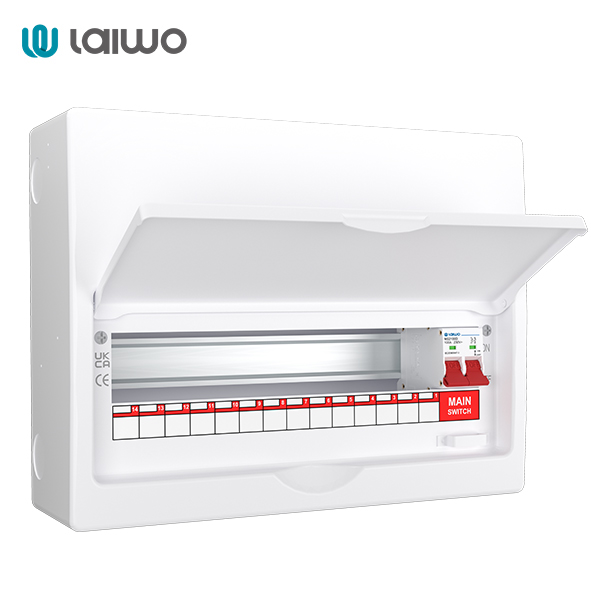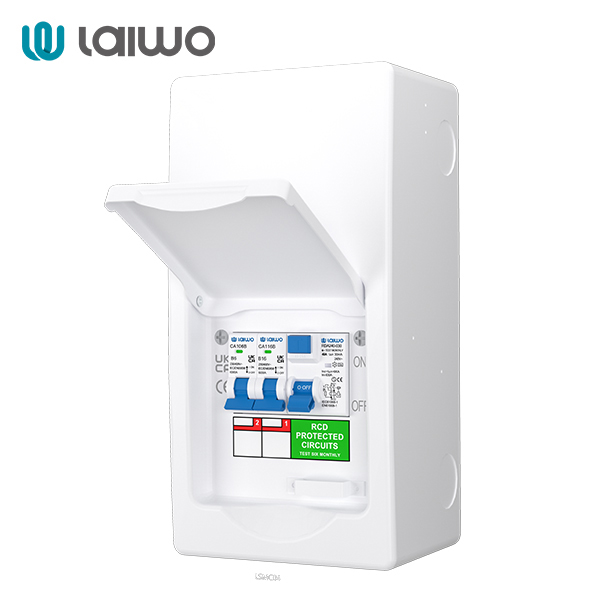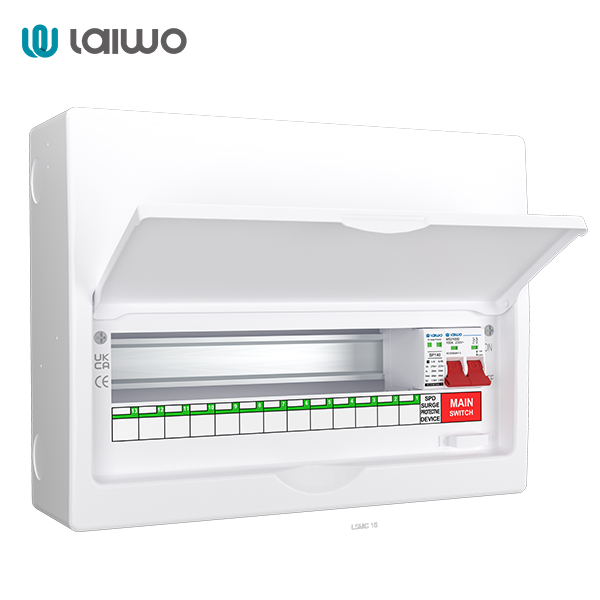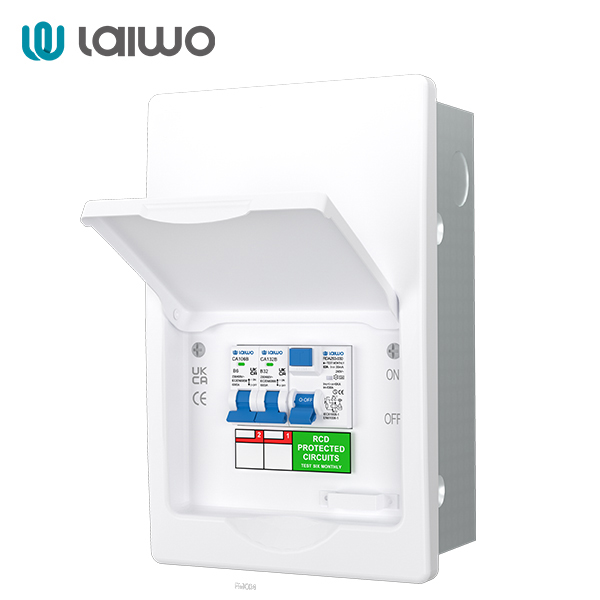


Reading Time: Approx. 12 minutes | Category: Electrical Installation & Upgrades | Audience: Electricians & Contractors
Replacing an outdated fuse box (consumer unit) with a modern distribution board is one of the most common and essential upgrade jobs that professional electricians undertake. As electrical safety standards evolve and household power demands increase, the "fuse wire" systems of the past are rapidly becoming obsolete. They are being replaced by sophisticated units that offer far superior protection, reliability, and convenience.
Modern RCBO (Residual Current Breaker with Overcurrent protection) distribution boards represent the pinnacle of domestic and light commercial circuit protection. Unlike older boards that rely on simple thermal fuses or shared RCDs (Residual Current Devices), RCBO boards provide individual, dedicated protection for every single circuit. This means better fault isolation, significantly faster troubleshooting, and a safer environment for the end user. For the electrician, installing these boards is also a mark of quality workmanship, delivering a system that is future-proofed against the demands of modern technology.
Important Disclaimer: This guide is intended for professional electricians, electrical contractors, and apprentices under supervision. Replacing a consumer unit is NOT a DIY task. In many jurisdictions, including the UK (under Part P of the Building Regulations), this work is notifiable and must be carried out by a competent person who can issue the appropriate Electrical Installation Certificate. Attempting this work without qualification is illegal and dangerous.
Learn More:
RCD vs RCBO vs MCB Fuse Boxes: What’s the Difference?
What is the difference between fuse box and distribution board?
For many homeowners and business owners, the fuse box is "out of sight, out of mind" until something goes wrong. However, for electricians, an old rewireable fuse board is an immediate red flag. There are three primary reasons why these units require urgent replacement.
The most critical deficiency of old fuse boxes is the complete absence of RCD protection. Rewireable fuses (BS 3036) only protect the cable from overcurrent; they offer zero protection against earth leakage or electric shock. If a person touches a live conductor, a fuse will not blow fast enough to save their life. Modern RCBO boards integrate 30mA earth leakage protection on every circuit, drastically reducing the risk of fatal electric shock and electrical fires caused by arcing or tracking. Upgrading to a modern board is the single most effective safety improvement that can be made to an electrical installation.
Electrical consumption patterns have changed dramatically since the 1970s and 80s. Old fuse boxes were designed for homes with a few lights, a cooker, and a TV. They were never engineered to handle the continuous, high-load demands of modern life: electric vehicle (EV) chargers, induction hobs, power showers, heat pumps, and home office servers. These heavy loads can cause thermal stress on old fuse carriers and terminations, leading to overheating and potential fire hazards. A modern distribution board is designed with robust busbars and high-capacity terminals specifically to manage these intensive loads safely.
Electrical regulations are constantly updated to improve safety. An installation that was compliant in 1990 is likely to be non-compliant today. Common failures found in old boards during Electrical Installation Condition Reports (EICR) include lack of RCD protection for sockets, no RCD protection for cables buried in walls, and exposed live parts due to broken fuse carriers. For landlords renting out properties or homeowners looking to sell, replacing the fuse box is often a mandatory step to achieve a "Satisfactory" EICR rating and ensure legal compliance.
Learn More:
Why Certifications Matter for Distribution Boxes, Breakers, and Fuses
What is the difference between the 17th and 18th edition consumer unit?
.jpg)
When upgrading a consumer unit, electricians often have a choice between a dual-RCD "split load" board and a full RCBO board. While the split load board has been the standard for years due to lower cost, the industry is heavily shifting toward RCBOs. Here is why professionals are making the switch.
Learn More: Why RCBOs Are a Must-Have in Modern Distribution Boards
The "all-RCBO" approach means every circuit is independent. If a fault occurs on the kitchen sockets, only the kitchen socket breaker trips. The lights, the fridge, the intruder alarm, and the Wi-Fi all stay on. In contrast, a dual-RCD board protects half the house on one device. A single fault can plunge multiple rooms into darkness and disable critical appliances. RCBOs eliminate this "nuisance disconnection," providing a much better experience for the customer.
Learn More: Why Electricians Install One RCBO Per Circuit
Time is money on site. When an RCBO trips, the electrician knows exactly where the problem is: "Circuit 4, Downstairs Sockets." There is no ambiguity. With a dual-RCD board, if the main RCD trips, the electrician must isolate every MCB, reset the RCD, and switch them on one by one to find the culprit—a time-consuming process of elimination. RCBOs allow for immediate fault location, reducing the time spent on diagnostic testing.
Nuisance tripping is a major headache for installers. Modern electronics (LED drivers, computers, washing machines) all have small amounts of natural earth leakage. On a shared RCD, these small leakages accumulate. If they exceed the 30mA threshold, the RCD trips, even if there is no actual fault. This leads to frustrated customers and unpaid call-backs for the electrician. Because each RCBO only sees the leakage from its own single circuit, nuisance tripping from cumulative leakage is virtually eliminated.
Installing a full RCBO board, often referred to as a "High Integrity" or "All-RCBO" setup, is now widely considered best practice. While slightly more expensive in hardware costs, the superior reliability and safety make it the preferred choice for professional installations. It is a robust solution that minimizes future problems and demonstrates a commitment to quality.
Replacing a consumer unit is a complex procedure that requires methodical planning and execution. It is not just about swapping wires; it involves comprehensive testing and verification.
Before the old fuse box is even touched, a full assessment of the existing installation is required. The electrician must verify the earthing arrangement (TN-S, TN-C-S, or TT) and the size of the main bonding conductors to gas and water services. Crucially, a Global Insulation Resistance test should be performed. Old wiring often has latent faults that the old rewireable fuses ignored.
Pro Tip: Never install a sensitive modern RCBO board onto old wiring without testing first. If there is an existing Neutral-Earth fault, the RCBOs will trip instantly upon energization. Identify and fix faults before the unit change.
Safety is paramount. The main supply must be isolated. This usually involves pulling the main cutout fuse (if authorized) or switching off the main isolator and locking it off. The electrician must then use a verified voltage indicator (GS38 compliant) to prove the system is dead on all conductors.
Pro Tip: "Dead testing" saves lives. Never assume a board is dead just because a switch is off. Always prove your test instrument against a proving unit before and after testing the installation.
Once safe, the existing circuits are disconnected. Labelling is critical at this stage. Every Phase and Neutral conductor must be identified and paired correctly. In older installations, it is common to find "borrowed neutrals" (where lights on the upstairs circuit use the downstairs neutral). Identifying these now prevents chaos later. The old wooden backboard or mounting surface is then assessed for suitability.
The new enclosure is mounted securely, ensuring it is level and accessible. The main tail cables (Phase and Neutral from the meter) are connected to the main switch. The copper busbar is installed. Then, the individual RCBOs are clipped onto the DIN rail. Modern RCBOs are often compact single-module devices, which saves valuable space inside the enclosure.
This is the stage where the skill of the electrician is most visible. Cables should be routed neatly within the enclosure, avoiding a "spaghetti" mess. Phase conductors are terminated into the top of the RCBOs. Neutral and Circuit Protective Conductors (Earths) are connected to their respective terminal bars. All connections must be tightened to the manufacturer's specified torque settings using a calibrated torque screwdriver.
Pro Tip: Poor terminations are the #1 cause of thermal damage in consumer units. Using a torque screwdriver is not optional—it is a requirement of BS 7671 regulations to ensure long-term reliability.
With the board installed, the installation is energized. A full suite of tests is then carried out on every circuit: Continuity of CPC, Insulation Resistance, Polarity, Earth Fault Loop Impedance (Zs), and RCD testing. Each RCBO must be tested to ensure it trips within the required time (usually <300ms at 1x rated current) and does not trip at half its rated current.
Pro Tip: Testing confirms that the protection you just installed actually works. It is the only way to legally certify the work. Documentation of these test results is mandatory.
The job is not finished until the paperwork is done. An Electrical Installation Certificate (EIC) is completed, detailing the characteristics of the installation and the test results. The customer is given a copy, and the work is notified to Building Control (where applicable). A "Circuit Details" label is affixed to the front of the board so the user knows exactly what each switch controls.
Every retrofit job presents challenges. Here is how upgrading to an RCBO board helps solve common site issues.
On old dual-RCD boards, a single fault would take out half the house. Customers panic when they lose lights and power simultaneously. With an RCBO board, this problem disappears. The fault is contained to one specific circuit, making the system resilient and much less stressful for the homeowner.
During the upgrade process, electricians often uncover "skeletons in the closet"—DIY wiring disasters, chewed cables in the attic, or dampness in outdoor sockets. While frustrating, the sensitive nature of RCBOs forces these dangerous faults to be fixed. You cannot leave a dangerous fault on an RCBO system because it simply won't reset. This ensures that the final installation is genuinely safe, not just cosmetically upgraded.
Old fuse boxes are often crammed into tiny cupboards or under stairs where space is premium. Trying to wrestle thick modern cables into a small enclosure is difficult. Modern RCBO boards are designed with more generous internal dimensions and better cable routing options. Compact RCBOs also free up space on the DIN rail, making wiring easier and allowing room for future expansion.
One of the biggest fears for an electrician is the phone ringing two days after a job. "Since you left, the power keeps tripping." This is almost always due to shared RCDs reacting to cumulative leakage. By installing RCBOs, you eliminate the root cause of these nuisance trips. The installation is stable from day one, protecting your reputation and your profit margin.
Choosing a quality manufacturer makes a huge difference to the installation speed. A cheap board might save £20 upfront but cost hours in labor.
Good distribution boards come with the main switch, busbars, and neutral/earth bars pre-installed or easily configured. Some feature "plug-in" or "clip-in" busbar systems that eliminate the need for cutting and stripping individual linking wires.
Time is often wasted drilling holes in metal enclosures. Premium boards feature multiple, easy-to-remove knockouts on all sides (top, bottom, rear, and sides), allowing cables to enter exactly where needed without awkward bending or on-site drilling.
A logical internal layout, with ample space behind the DIN rail for dressing cables, allows for faster termination. Clear numbering on the neutral and earth bars ensures that the corresponding conductors for Circuit 1 go to Terminal 1, reducing the risk of cross-connection errors.
When testing the installation, having clear circuit separation speeds up the process. If a test reading is abnormal, you know it is isolated to that specific cable run. You don't have to spend time disconnecting other circuits that might be interfering with the reading.
Learn More:
Surface vs Flush Mounted Distribution Boards | Buyer’s Guide
How a Well-Designed Distribution Board Saves Installation Time
Setting customer expectations is key. Replacing a fuse board is a significant job, not a quick fix.
Typical Install Time: For a standard 3-bedroom house with 8-10 circuits, a fuse board replacement typically takes 4 to 6 hours. This includes testing, removal, installation, and re-testing. However, if faults are found (which is common), this can easily extend to a full day or more.
Typical Cost: In the UK market, a professional consumer unit change typically costs between £500 and £1,200. This price varies based on the size of the board, the brand of RCBOs used, and complexity of the existing wiring.
Factors Affecting Time:
Number of circuits: More circuits = more testing and termination time.
Condition of wiring: Old, brittle rubber insulation requires delicate handling.
Need for rewiring: Sometimes the tails or earthing conductors need upgrading to 16mm² or 25mm².
Access: Working in a cramped cupboard takes longer than working on an open wall.
As an electrician, you are the expert advisor. You should recommend an RCBO upgrade in the following scenarios:
Old Fuse Box (No RCD): Any board with rewireable fuses or cartridge fuses offers inadequate protection against electric shock.
Frequent Tripping: If a customer complains of nuisance tripping on a dual-RCD board, upgrading to RCBOs solves the problem permanently.
Renovation Projects: New kitchens or bathrooms often require RCD protection by law. It is often more cost-effective to replace the whole board than to add separate protection.
EV Charger Installation: Adding an EV charger adds a heavy, continuous load. A modern board ensures the infrastructure can handle it safely.
Commercial Upgrades: Offices and shops cannot afford downtime. RCBOs ensure business continuity by isolating faults.
The transition from fuses to RCBOs is one of the most positive advancements in domestic electrical safety. For the electrician, the priority must always be safety first. Never rush the testing phase. The tests are what confirm the installation is safe; the hardware is just the tool.
Choosing an RCBO-per-circuit design is a choice for quality. It shows a commitment to providing the customer with the most reliable, safe, and convenient system available. While it requires a higher initial investment, the long-term reliability and ease of maintenance make it the undisputed champion of modern circuit protection.
Remember, a good installation is not just about screwing a box to the wall. It is about neat wiring, clear labelling, thorough testing, and correct certification. By focusing on these fundamentals, you deliver a system that is safe, compliant, and built to last for decades.
Learn More:
MCBs Guide: Types, Functions & Electrical Safety Tips
Metal Vs. Plastic Distribution Boxes: Choosing The Right One For Your Project)