Next: Top 5 Circuit Breakers Electricians Prefer in 2025 (Based on Installation Experience)



Reading Time: Approx. 10 minutes | Category: Electrical Installation & Best Practices | Audience: Electrical Contractors & Installers
In the electrical contracting world, time is the single most valuable commodity. While safety remains the non-negotiable priority, efficiency is what drives profitability. Often, when we talk about productivity on site, the conversation revolves around tools, manpower, or scheduling. However, one critical component is frequently overlooked in the efficiency equation: the design of the distribution board itself.
A distribution board is more than just a metal enclosure for housing breakers and RCDs; it is the nerve center of an electrical installation. For the electrician on the ground, the difference between a poorly designed board and a well-engineered one is measured in hours, frustration, and ultimately, the bottom line. Good distribution board design isn’t just about aesthetics or satisfying a spec sheet—it is about tangible, practical features that dramatically improve electrician productivity and reduce costs on site.
This article explores how intelligent distribution board design translates directly into time savings, examining the specific features that streamline installation, minimize errors, and ensure smoother commissioning.
For decades, distribution boards were seen as utilitarian boxes—necessary, functional, but rarely innovative. However, as installation standards have tightened and project timelines have compressed, the "box on the wall" has had to evolve. Understanding why design matters is the first step in reclaiming lost time on projects.
Modern boards are engineered with the installer in mind. Manufacturers have begun to realize that the person wiring the board is the most critical user in the product's lifecycle. Design choices that facilitate easier mounting, faster component snapping, and intuitive wiring paths are not luxuries; they are essential tools for efficiency. Features like pre-wired busbars, DIN-rail mounting systems that actually align, and quick-connect terminals significantly reduce labor time. When an electrician doesn't have to fight the equipment to get it installed, the job moves faster.
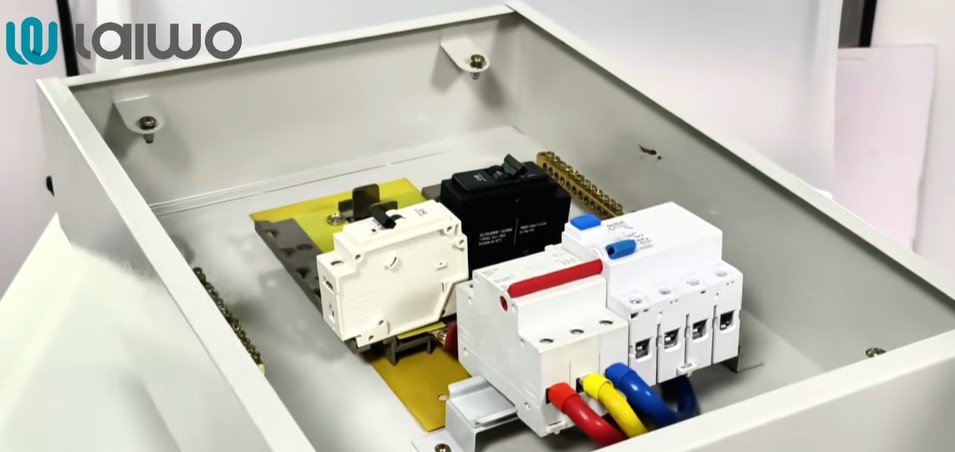
View Three Phase Plug-in MCB Metal Distribution Board Video
Chaos inside a panel is a recipe for disaster. A well-organized board with a clear, logical circuit layout makes it infinitely easier for electricians to terminate cables and trace circuits. Conversely, a messy panel often leads to the dreaded "spaghetti wiring" scenario. This disorganization doesn't just look unprofessional; it actively causes rework. If a circuit is difficult to trace during installation, it is easy to mislabel or terminate incorrectly. Correcting these errors after the fact—especially once the board is energized—is a massive time sink. A good design imposes order, reducing the mental load on the installer and preventing mistakes before they happen.
Time saved isn't just about how fast a screwdriver turns; it's also about how fast a project gets signed off. Distribution boards built to rigorous standards (such as BS EN 61439, IEC 61439, or local electrical codes) pass inspection faster. Inspectors can easily verify the integrity of a well-designed, tidy board. When the design inherently supports compliance—through proper spacing, clear labelling, and certified components—there is less "redo" time on site required to satisfy regulatory bodies.
Learn More: Why Certifications Matter for Distribution Boxes, Breakers, and Fuses)
To understand the true value of design, we must look at the board through the eyes of the person installing it. Several specific design elements directly impact the speed and quality of work on job sites.
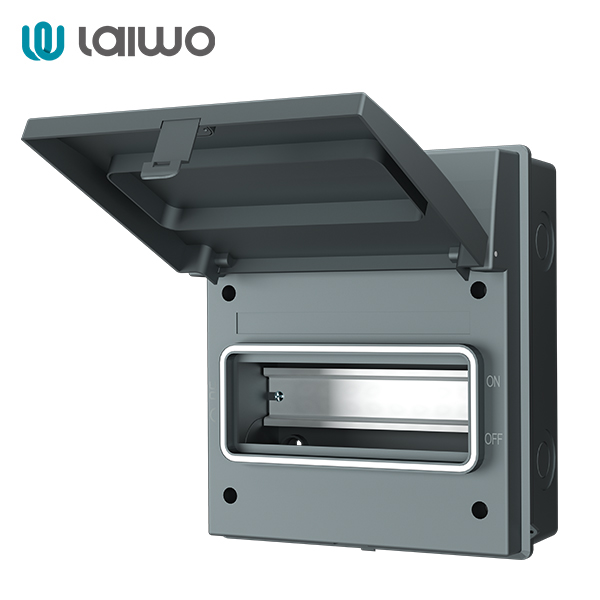
One of the biggest frustrations for electricians is a cramped enclosure with no thought given to cable management. Thoughtful arrangement of internal components—specifically the positioning of busbars relative to neutral and earth bars—lets electricians feed conductors efficiently. A design that provides ample "gutter space" (the space between the chassis and the enclosure wall) allows for neat dressing of cables without awkward bends or cross-overs. This clarity speeds up the physical installation process and significantly reduces the risk of insulation damage during termination.
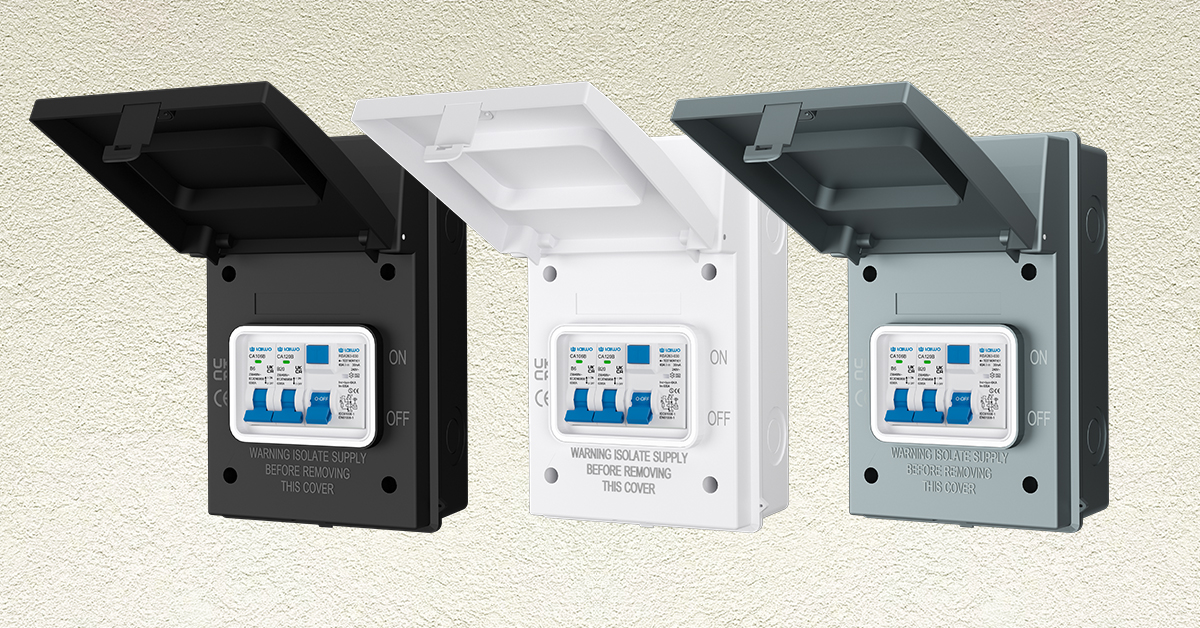
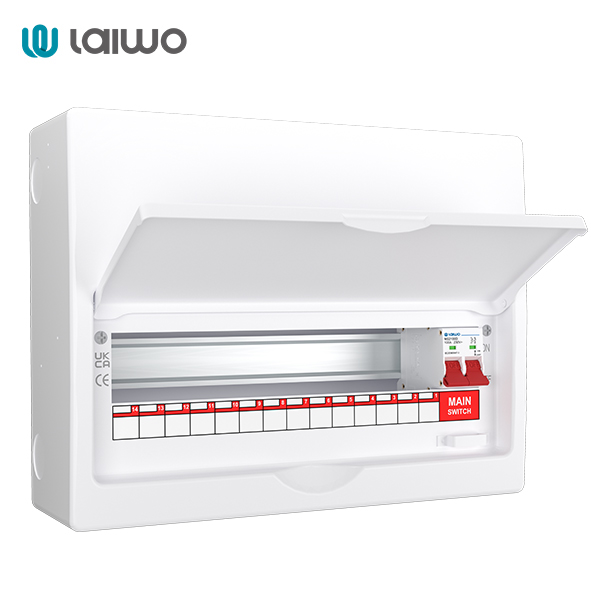
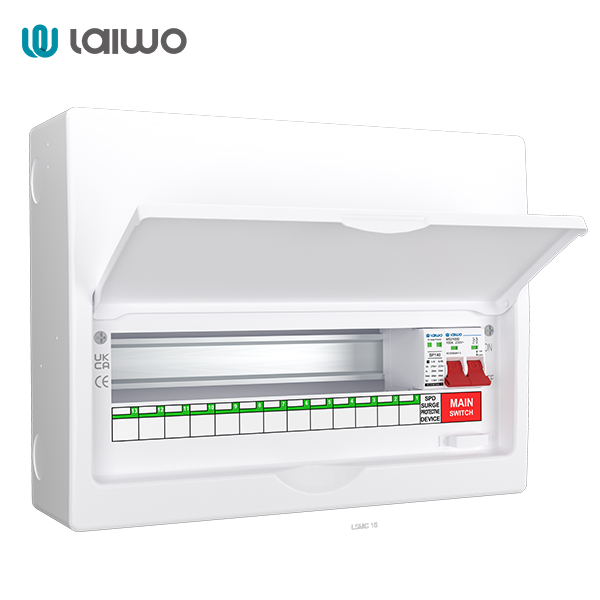
The rise of pre-populated boards has been a game-changer for installation speed. Boards that come with main switches, RCDs, or even Surge Protection Devices (SPDs) pre-installed remove a significant portion of assembly work. Instead of unboxing, sorting, and clipping in dozens of individual breakers, the electrician can focus immediately on bringing cables into the board. This reduces the time spent fetching and placing individual parts, and it also eliminates the risk of arriving at a site with the wrong component count.
Learn More: RCD vs RCBO vs MCB Fuse Boxes: What’s the Difference?
Getting cables into the board is often the first hurdle. Poorly designed boards might have limited entry points or knockouts that are difficult to remove without deforming the enclosure. A well-designed board features multiple, strategically placed cable entry positions (top, bottom, and rear) and high-quality knockouts. This means electricians don't need to waste time drilling custom holes on site or improvising complex cable paths to enter the enclosure. It simplifies the glanding process and maintains the IP rating of the enclosure with minimal effort.
Learn More: Why IP Ratings Matter for Consumer Units?
Documentation is often an afterthought, but it is a critical part of the installation. Good design includes integrated labelling solutions—clear, spacious legend holders and pre-printed circuit identification labels. When the board provides a designated, protected space for the circuit chart, the electrician can complete the documentation as they go, rather than scrambling to create a makeshift label at the end of the job. This shortens the commissioning phase and makes future servicing far more efficient.
We can quantify the benefits of design by looking at specific tasks an electrician performs. Where exactly are the minutes and hours saved?
Consider the physical act of terminating a wire. In a poorly designed board, screw terminals might be difficult to access, obstructed by other components, or require the installer to contort their hand. In a well-designed board, terminals are accessible and often feature "cage clamp" or wide-entry designs that guide the cable in. Components that clip and screw in without contortions save perhaps 30 seconds per connection. Multiplied across a 36-way board with Phase, Neutral, and Earth connections for each circuit, those seconds add up to hours of saved labor per panel.
Learn More: How to Wire a Garage Consumer Unit: A Comprehensive Guide
The installation isn't finished until it's tested. This is often where time is lost chasing ghosts. Distribution boards with a logical layout and clearly labelled circuits reduce the time spent on continuity and polarity checks. If the Neutral and Earth bars are numbered to correspond with the Phase ways, the electrician can instantly identify which conductor belongs to which circuit. This eliminates the tedious process of "ringing out" cables to identify them, streamlining the testing sequence significantly.
Balancing phases in a three-phase installation is critical. A modular board with a clear circuit layout makes load balance and diversity adjustments simpler. If an electrician needs to move a breaker from L1 to L2 to balance the load, a well-designed busbar system facilitates this change easily. On rigid, poorly designed boards, moving a circuit might require significant disassembly of the busbar stack. Easy re-configuration reduces iterations at the site and ensures the system is balanced correctly the first time.
Learn More: 3 phase distribution board technical guide
No installation stays static forever. Clients expand, add new machinery, or renovate spaces. Well-designed boards allow for the easy addition of circuits later without ripping out existing wiring or redesigning the panel. Features like spare ways with blanking plates that are easy to remove, and busbars that are rated to handle additional capacity, mean that future work is a quick "add-on" rather than a complex "retrofit." This saves significant labor when clients call the electrician back for expansion work.
Learn More: 2 Way to 36 Way Distribution Boards - What’s the Difference?
To truly appreciate good design, one must acknowledge the pain of bad design. The following are real-world problems that lead to delays, which high-quality boards effectively eliminate.
We have all seen boards where the main switch obstructs the primary cable entry, forcing the installer to route heavy tails in tight, unsafe radii. Poor knockout design often forces time-wasting drilling, filing, and painting to prevent rust. Good design anticipates where the heavy cables will come from and provides a clear, unobstructed path to the main terminals.
Learn More: Metal Vs. Plastic Distribution Boxes: Choosing The Right One For Your Project
There is nothing worse than "knuckle-scraping" space constraints. Tight spacing makes terminations slower because the electrician has to be incredibly precise to avoid shorting against adjacent components. It also increases the chances of loose connections because the tool cannot get a good purchase on the terminal screw. Ample working space is a safety feature that doubles as a productivity booster.
When a board lacks proper labelling provisions, the electrician resorts to permanent marker on the metal cover or sticky tape that falls off. This leads to guesswork during testing or commissioning. If a fault occurs during energization, identifying the affected circuit becomes a guessing game, adding stressful hours to the end of a long day. Proper identification systems eliminate this ambiguity.
Proprietary or non-standard mounting systems can be a nightmare. If a breaker fails or a design change requires a different component, the electrician is stuck if the board only accepts a specific, hard-to-find brand. Using mismatched breakers or modifying busbars to fit generic components creates liability issues and confuses installers. Standardized DIN-rail and modular designs ensure that parts fit as expected, every time.
The savings from a well-designed board extend beyond the initial installation day. There is a direct link between the quality of the hardware and the long-term profitability of the contract.
Learn More: MCBs Guide: Types, Functions & Electrical Safety Tips
Boards designed to reduce ambiguity and error also reduce safety issues and call-backs. A loose neutral connection caused by a cramped workspace can lead to arcing, equipment damage, or fire. A confusing layout might result in a circuit being overloaded because it was misidentified. By minimizing the opportunity for human error through ergonomic design, the likelihood of a warranty call-back drops drastically. For a contractor, a call-back is pure loss; avoiding just one covers the cost of a premium board many times over.
Distribution boards with organized layouts and documented circuits make routine maintenance quick and safe. When an electrician returns for an annual inspection or EICR (Electrical Installation Condition Report), they can verify the installation efficiently. They don't have to waste billable hours deciphering the previous installer's work. This efficiency allows contractors to offer competitive maintenance contracts while maintaining healthy margins.
In commercial and industrial settings, downtime is expensive for the client. Faster installs with fewer follow-ups improve client satisfaction. If an electrician can perform a board change or upgrade in four hours instead of eight because the board was easy to work with, the client experiences less disruption. This builds a reputation for reliability and professionalism, leading to repeat business and referrals.
As the electrical industry becomes more competitive, the margin for error shrinks. Efficiency is no longer just about working harder; it is about working smarter. Choosing the right equipment is a significant part of that equation.
Good planning—even before arriving on site—reduces surprises and helps you finish faster. When selecting a distribution board, don't just look at the price tag. Look at the internal layout. Look at the earth bar positions. Check the cable entry options. A few minutes spent evaluating the design of the board during the procurement phase can save hours of frustration during the installation phase.
There is often a temptation to save money on the "box" to increase margins. This is a false economy. Higher-quality, modular boards designed for electrician workflows might cost slightly more upfront, but they reduce labor hours, consumable costs (like lugs and cable ties), and the risk of repeated trips. The labor savings almost always outweigh the hardware premium.
Finally, utilize the features the board provides. Train teams on consistent design and labelling practices. If every board your company installs is laid out and labelled in a standardized, professional manner, any electrician in your team can service any job. This interchangeability of labor is a massive operational advantage. It pays off in speed, service quality, and professional pride.
Learn More: Top 5 Distribution Boards Electricians Prefer in 2025