Next: RCBO vs MCB + RCCB: What's More Practical for Electricians?



In the fast-paced world of electrical installations, the distribution board is far more than just a box that houses circuit breakers. For working electricians, the board's design directly impacts installation speed, job site safety, compliance with BS EN 61439-3 standards, and—crucially—the frequency of costly callback visits.
When electricians evaluate distribution boards, they're thinking beyond specifications on a data sheet. They're considering real-world factors: Can I route cables cleanly in tight spaces? Are the neutral and earth bars accessible without twisting wires? Does this board come with integrated surge protection, or will I need to source and wire additional components on site? Will the knockout positions work with my trunking layout?
These practical considerations determine whether an installation flows smoothly or becomes a source of frustration, rework, and potential safety issues. In 2025, as electricians face increasing demands from EV charging installations, smart home systems, and stringent surge protection requirements, choosing the right distribution board has never been more critical.
This guide examines the top five distribution boards that electricians consistently recommend based on real installation experience, highlighting the design features that make jobsite work faster, safer, and more reliable.
Electricians often judge a board by how easy it is to wire and route cables, especially in tight spaces and complex sites. Proper design helps minimize rework and messy wiring routes. According to industry research, disorganized wiring and poor cable management are among the top installation mistakes that lead to inspection failures and callbacks.
A well-designed distribution board offers adequate internal space for cable dressing, logical busbar layouts, and clear pathways that allow electricians to route incoming and outgoing conductors without excessive bending or cramping. This becomes especially critical in retrofit situations where existing building constraints limit access.
Proper neutral and earth bar positioning ensures that protective earthing and return conductors are easy to terminate and maintain. The IEC 61439 standard emphasizes that earth bars should have appropriate short-time current ratings, and their accessibility is crucial for safe maintenance and testing.
Electricians frequently report that poorly positioned neutral or earth bars create scenarios where:
Conductors must be twisted or bent excessively to reach terminals
Multiple circuits sharing limited terminal space create confusion
Testing and fault-finding becomes unnecessarily difficult
Boards with twin neutral and earth bars positioned on both sides of the enclosure allow for better phase balancing and neater circuit organization, particularly important in three-phase installations.
Boards with pre-installed SPD (surge protective device) are preferred because they protect sensitive loads against voltage transients without extra wiring on site. Under BS 7671:2018 + A2:2022 (the 18th Edition), surge protection is now mandatory in most new installations unless a risk assessment proves otherwise.
Pre-populated SPDs eliminate several pain points for electricians:
No need to calculate and verify voltage protection levels (VPL)
Correct conductor sizing is already determined
Connection routing is optimized at the factory
Testing and commissioning is faster
Type 2 SPDs are typically installed at distribution boards, providing 20-40 kA surge protection for downstream circuits. Factory integration ensures proper connection to all phases and neutral, reducing the risk of installation errors.
Design that complies with regional/BS EN 61439-3 standards reduces inspection failures and callbacks. IEC 61439-3:2024 specifically defines requirements for distribution boards intended to be operated by ordinary persons, ensuring safety through proper busbar arrangements, insulation coordination, and internal segregation.
Compliant busbars and internal wiring reduce shock and fire risks. Electricians working with certified boards benefit from:
Pre-verified short-circuit ratings
Proper temperature rise characteristics
Correct internal clearances and creepage distances
CE/UKCA marking confirming third-party verification
Learn More:
Why IP Ratings Matter for Consumer Units?
What is the difference between the 17th and 18th edition consumer unit?
Distribution Boards: A Comprehensive Guide for Professionals and Consumers
Installation Space & Ease of Access
Boards that allow neat routing of cables and easy access for testing get top marks. Internal depth, gland plate design, and DIN rail accessibility all contribute to installation speed.
Neutral & Earth Bar Layout & Accessibility
Easy and correct earth/neutral layout improves safety and reduces installation time. Twin bars positioned logically allow single-phase loads to be distributed evenly across three-phase supplies, maintaining neat layouts and clear discrimination.
Cable Entry Design & Knockouts
Multiple knockouts (top, bottom, sides) and proper sizing make routing large cables easier, especially when working with trunking or complicated site cable setups. Electricians report that flexible knockout arrangements eliminate the need for field modifications like drilling or cutting, which can compromise IP ratings and void warranties.
Integration of Protection Devices
Pre-populated surge protection (T2 SPDs), RCBOs/MCBs reduce field wiring and ensure consistent protective schemes. RCBOs combine overcurrent and earth fault protection in a single device, reducing panel space requirements and simplifying wiring compared to MCB + RCCB combinations.
Typical Use Cases
Suitability for residential, commercial, EV charging, industrial and three-phase systems determines whether a board can serve multiple project types or requires specialized alternatives.

On-site Reality:
Electricians report this type of board cuts installation time because neutral cable, live busbar, neutral & earth bars and cable glands are already fitted—reducing field wiring complexity. One installer noted: "The pre-wired SPD and factory-fitted RCBOs mean I can commission a domestic board in half the time compared to building it from components."
Surge & Safety:
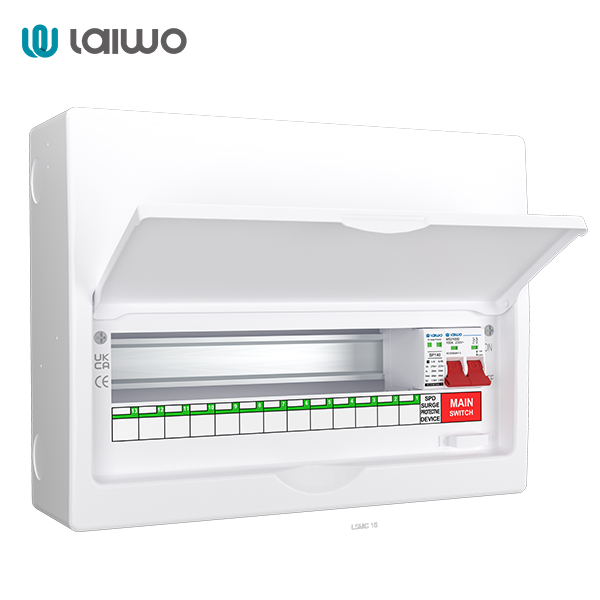
Comes with 20/40 kA T2 SPD and RCBOs pre-installed, so electricians can deliver a compliant, surge-protected system without hunting for extra components in storage. This meets the mandatory surge protection requirements of the 18th Edition without additional procurement or wiring work.
Main Switch & Expandability:
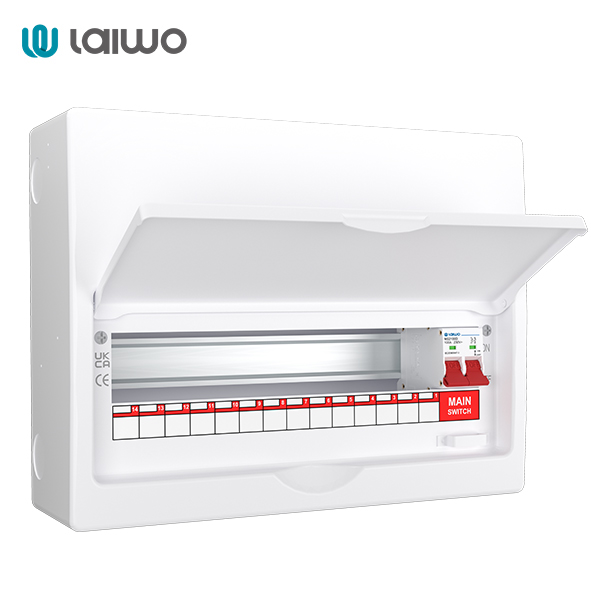
DP 100A/125A main switch and options from 4 to 24 ways mean electricians can handle small homes to larger commercial circuits from the same base unit. Modular construction allows future expansion without replacing the entire board.
Cable Entry Practicality:
Multiple knock-outs (25 mm & 32 mm) on all sides make snake-in and snake-out cable runs easier, especially in retrofit scenarios. Top and bottom entry points accommodate vertical trunking runs, while side entries work for horizontal cable installations.
Compliance:
CE/UKCA certified to BS EN 61439-3 gives confidence to pass inspection. Third-party verification confirms that the assembly meets all regulatory requirements for materials, construction, and performance.
.jpg)
Site Feeling:
Outdoor EV charger sites can be messy with water ingress and dust; IP65 aluminium housing withstands elements on industrial and residential driveways. The sealed enclosure maintains protection even during pressure washing or severe weather exposure.
Installation Workflow:
Clear neutral & earth bar layout and top/bottom knockouts let cables pass without bending back on themselves. Electricians note that the deliberate removal of standard knockouts in favor of customizable entry points provides greater flexibility for unusual mounting positions or cable approach angles.
Protected Circuits:
Pre-fitted Type A RCBOs and T2 SPD mean electricians don't need to source extra surge or leakage protection parts separately. Type A RCBOs are essential for EV charging installations as they detect both AC and pulsating DC residual currents, which standard Type AC RCDs cannot handle.
Quick Mounting:
Surface mount design makes wall installs fast and secure. Pre-drilled mounting holes accommodate various fixing methods, and the robust metal construction supports the weight of large armored cables without additional support brackets.
.jpg)
Real-World Scenario:
Electricians on commercial or industrial sites appreciate a board rated AC380V/415V 50/60 Hz with 125A capacity—it handles heavy loads without overheating. One industrial electrician explained: "When you're feeding multiple large motors or HVAC systems, you need a board that won't thermal-trip under sustained high current. This design delivers."
Safety First:
Fitted with 4P 125A main switch + 4P T2 SPD ensures all three phases and neutral are protected from surges at the origin point. Coordinated surge protection across all conductors is critical in three-phase systems where transients can appear line-to-line or line-to-neutral.
Wiring Practicality:
Twin neutral & earth terminals on both sides make busbar routing and grouping neat, especially when phase balancing is needed. This layout supports proper load distribution and helps maintain neutral current within acceptable limits.
Industrial Reliability:
Robust construction with high IP rating suitable for dusty or damp industrial environments. Heavy-duty DIN rails accommodate larger breakers, and increased internal spacing reduces heat buildup during high-load operation.

Field Advantage:
Flame-retardant ABS body with transparent lid makes it easy to see protective devices during commissioning, without opening the enclosure. This feature proves invaluable during final testing and handover, allowing quick visual confirmation that all breakers are in the correct position.
Outdoor Ready:
IP65 protection is appreciated by outdoor wiring crews where moisture and dust are constant challenges. The sealed enclosure prevents insect ingress and condensation buildup, common issues in outdoor installations that can cause nuisance tripping or corrosion.
Visibility & Service Ease:
Transparent hinged lid keeps components visible, reducing callbacks for simple identification tasks. Homeowners and facility managers can quickly identify which circuit has tripped without removing covers or calling an electrician.
Cost Considerations:
Economical option for budget-conscious projects without compromising on protection standards. Particularly popular for temporary installations, construction sites, or outdoor lighting circuits where full metal enclosures may be cost-prohibitive.
.jpg)
Installer Reality:
Electricians like plug-in MCBs because they make component replacement and upgrades fast in industrial environments. Plug-in breakers can be installed or removed without loosening terminal screws, reducing maintenance time and eliminating the risk of damaging busbar connections during breaker replacement.
Safety:
Fitted with 3P 100A main switch + 4P 100A RCD gives solid ground fault protection—important when working in multi-phase industrial panels. The combination provides both isolation capabilities and personnel protection in a single, compact assembly.
Punch-out Holes & Mounting:
Surface mounted with practical cable entry points that match common conduit layouts. Pre-marked punch-out positions accommodate standard conduit sizes (20mm, 25mm, 32mm), and reinforced mounting flanges support the weight of heavy conduit runs.
Maintenance Advantage:
Plug-in design significantly reduces downtime during breaker replacement or circuit reconfiguration. Industrial facilities with multiple similar boards can maintain a small stock of common breaker ratings for immediate swap-out when needed.
Focus on real site issues electricians face based on industry reports and installation standards:
Poor neutral & earth busbar access leading to twisted wires or inaccessible terminations—a common failure noted in installation standards. Conductors forced into awkward angles create high-resistance connections that can overheat and fail.
Insufficient cable entry design forcing field modifications or drilled holes, which increases labor and error risk. Any modification to factory-sealed enclosures compromises IP ratings and can void manufacturer warranties and insurance coverage.
Lack of SPD integration early in design—omission in surge protection is a common design oversight that later causes device failure. Retrofitting surge protection after installation requires additional wiring, panel modifications, and creates potential weak points in the protection scheme.
Messy internal wiring that can compromise maintenance safety. Many standards state clear wiring, color coding and bundling is essential for future troubleshooting and compliance verification. Poor cable dressing makes fault-finding difficult and increases the risk of accidental contact during maintenance.
Incorrect load calculations resulting in undersized busbars or inadequate circuit protection. Electricians report that boards without clear load ratings or insufficient documentation increase the risk of overloading, especially when circuits are added during future modifications.
Callbacks cost electricians time, money, and reputation. Here's how proper board selection prevents them:
Right board = fewer installation errors
Correct cable sizes and proper earth/neutral layouts significantly reduce inspector rejections and callbacks. Recent industry analysis identifies load calculation errors and improper neutral/earth connections as leading causes of inspection failures.
Factory-populated protections avoid mismatched components
Pre-installed RCBOs and SPDs eliminate the risk of selecting incompatible protective devices or incorrect voltage ratings. This factory integration reduces troubleshooting visits for nuisance tripping caused by sensitivity mismatches.
Better knock-out placement prevents cable damage
Cables that don't rip insulation during routing mean fewer faults and complaints. Sharp enclosure edges or undersized cable entries are common causes of insulation damage that may not become apparent until weeks or months after installation.
Clear labeling reduces user confusion
Well-designed boards with intuitive circuit labeling and visible device ratings help end users understand their electrical system, reducing unnecessary emergency calls for simple breaker resets.
Adequate future expansion capability
Boards with spare ways allow adding circuits without replacing the entire panel, protecting the electrician's investment in labor and maintaining system integrity.
As we move through 2025, the electrical installation landscape continues to evolve. EV charging requirements, smart home systems, renewable energy integration, and mandatory surge protection all place new demands on distribution board design and installation practices.
Installation-centric design matters:
Features like logical neutral/earth bar layout, flexible cable entry systems, pre-installed surge protection, and appropriate IP ratings directly improve job quality and installation speed. Electricians who prioritize these factors report faster commissioning, fewer callbacks, and higher customer satisfaction.
Select boards with clear compliance documentation:
Boards that come with comprehensive technical data, test certificates, and compliance statements reduce inspection issues and simplify documentation requirements for electrical installation certificates.
Track emerging trends:
The growing prevalence of EV charging installations, increased adoption of RCBO protection, and stricter surge protection requirements under the 18th Edition represent ongoing trends that electricians must accommodate. Selecting distribution boards that anticipate these requirements provides future-proof solutions.
Invest in quality over initial cost:
While budget pressures exist on every project, distribution boards represent a critical safety component that will remain in service for decades. The marginal additional cost of well-designed boards with proper surge protection and clear internal layouts is quickly recovered through faster installation and eliminated callbacks.
Continue professional development:
Understanding the practical implications of standards like BS EN 61439-3, IEC 61439, and BS 7671 regulations helps electricians make informed decisions about board selection and installation practices. These standards exist to protect both installers and end users—working with them rather than around them creates better outcomes.
The distribution boards featured in this guide represent current best practice based on real-world installation experience. By prioritizing practical design features—accessible neutral/earth bars, flexible cable entry, integrated surge protection, and clear compliance documentation—electricians can deliver safer, faster, and more reliable installations that stand the test of time.