

For electricians working on residential, commercial, and industrial installations, choosing the right circuit protection strategy isn't just about compliance—it's about practicality, efficiency, and client satisfaction. The debate between using standalone RCBOs versus the traditional MCB + RCCB combination continues to divide professionals, with strong arguments on both sides depending on project requirements, budget constraints, and long-term maintenance considerations.
This comprehensive comparison examines both approaches through the lens of working electricians who need to balance safety standards, panel space limitations, installation complexity, cost considerations, and troubleshooting efficiency. Whether you're upgrading an aging consumer unit or designing protection schemes for new builds, understanding the practical differences between these protection methods will help you make informed decisions that benefit both your workflow and your clients.
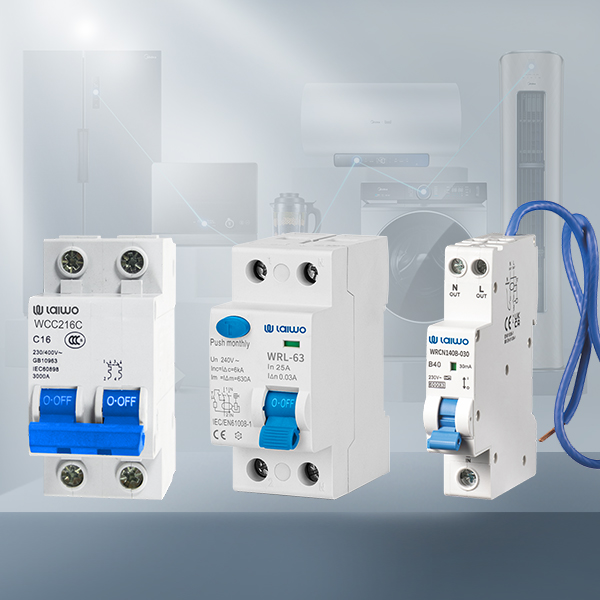
Before diving into practical comparisons, let's establish clear definitions of each protective device and their specific functions within electrical installations.
MCB (Miniature Circuit Breaker) is a thermomagnetic device designed to protect circuits against overcurrent conditions and short circuits. The thermal element responds to sustained overloads, while the magnetic trip mechanism provides instantaneous protection against short-circuit faults. However, MCBs offer no protection against earth leakage currents, which means they cannot prevent electric shock or detect insulation failures that don't produce overcurrent conditions.
Learn More:
RCCB (Residual Current Circuit Breaker), also known as an RCD (Residual Current Device), monitors the balance between live and neutral currents. When it detects a difference—typically 30mA in domestic settings—indicating current leaking to earth through a fault or human contact, it trips rapidly to prevent electrocution. RCCBs provide essential shock protection but cannot protect against overload or short-circuit conditions on their own, which is why they're always used in conjunction with MCBs.
Learn more:
RCBO (Residual Current Breaker with Overcurrent protection) combines the protective functions of both MCB and RCCB in a single, integrated device. An RCBO provides simultaneous protection against overcurrent, short circuits, and earth leakage faults. This integration offers comprehensive circuit protection in a compact form factor, representing a significant evolution in circuit protection technology that addresses multiple safety concerns in one device.
Learn More:
RCBO Guide
Understanding these fundamental differences is crucial when considering under voltage protection circuit breaker applications and designing comprehensive protection schemes that address all potential fault scenarios.
Learn More:
Understanding the difference between MCB RCCB and RCBO
Understanding 1-4 Pole Circuit Breakers: A Comprehensive Guide
From a pure safety perspective, both approaches can deliver equivalent protection when properly specified and installed, but they achieve this protection through different architectures.
The MCB + RCCB combination provides layered protection where each device addresses specific fault types. The MCB handles thermal overloads and magnetic short-circuit protection for the circuit it protects, while a shared RCCB (typically protecting multiple circuits) monitors earth leakage across all downstream circuits. This arrangement works effectively but requires careful coordination between devices and proper understanding of discrimination and selectivity principles.
RCBOs integrate all three protection functions—overcurrent, short-circuit, and earth leakage—within a single unit. This integration offers several safety advantages. First, it eliminates potential wiring errors between separate protection devices. Second, it ensures that every protected circuit has dedicated earth leakage protection rather than sharing RCCB protection across multiple circuits. Third, modern RCBOs often incorporate advanced electronics that provide more precise tripping characteristics and better immunity to nuisance tripping from normal circuit transients.
When a fault occurs, the behavior differs significantly between these setups. With MCB + RCCB, an earth leakage fault will trip the shared RCCB, potentially de-energizing multiple circuits simultaneously until the fault is located. An RCBO, conversely, isolates only the faulty circuit, maintaining power to all other circuits and significantly improving system availability.
The under voltage protection release function, while typically a separate consideration, integrates well with RCBO-based distribution systems where comprehensive protection logic is centralized at the circuit level rather than distributed across multiple device types.
Panel space represents one of the most compelling practical arguments in the RCBO versus MCB + RCCB debate, particularly in residential and light commercial applications where consumer unit real estate is at a premium.
A typical RCBO occupies one or two module spaces on a DIN rail (depending on rating and manufacturer), providing complete protection for a single circuit. In contrast, the MCB + RCCB approach requires one module space per MCB plus an additional 2-4 module spaces for the RCCB that serves multiple circuits.
Consider a practical example: a 6-circuit residential distribution board protecting lighting, socket circuits, and dedicated appliance circuits. Using RCBOs, this installation would require 6-12 module spaces (assuming single or double-pole RCBOs). Using the traditional approach with individual MCBs and a shared RCCB would require 6 module spaces for MCBs plus 2-4 spaces for the RCCB—totaling 8-10 spaces but with the limitation that all circuits share a single earth leakage detector.
The space advantage of RCBOs becomes even more pronounced when regulations require split RCD protection (dividing circuits across at least two RCCBs to prevent total power loss). In these scenarios, MCB + RCCB installations can require significantly more panel space and more complex wiring arrangements.
From a wiring perspective, RCBOs dramatically simplify installation. Each circuit simply connects to its dedicated RCBO—line in, line out, neutral in, neutral out. The MCB + RCCB configuration requires careful routing of all protected neutral conductors through the RCCB, proper phasing considerations, and meticulous attention to ensure that no neutral-earth connections exist downstream of the RCCB that could cause nuisance tripping.
The under voltage protection trip logic in modern installations often requires additional module space for monitoring relays or integrated protection functions, making compact RCBO-based solutions even more attractive when panel space is constrained.
Learn More:
Miniature Circuit Breaker Symbols in Electrical Diagrams
Breaking Capacity of Circuit Breakers: MCB, RCBO & RCCB Guide
Cost analysis in the RCBO versus MCB + RCCB debate requires looking beyond simple device purchase prices to consider total installed cost and long-term value.
At face value, MCB + RCCB combinations appear more economical. A quality MCB might cost $8-15, while an RCCB serving multiple circuits costs $40-80. Protecting six circuits might therefore cost approximately $48-90 for MCBs plus $40-80 for the RCCB—a total of $88-170. In contrast, six RCBOs at $35-60 each would cost $210-360 for device purchase alone.
However, this analysis ignores several important factors that affect real-world project costs:
Installation labor: RCBOs require significantly less wiring time. Each circuit connects directly to its protection device without the complex neutral routing required for RCCB configurations. For a typical residential installation, this can save 1-2 hours of skilled labor—potentially offsetting much of the device cost premium.
Panel and enclosure costs: The more compact RCBO installation may allow use of a smaller, less expensive consumer unit, or may enable fitting more circuits into an existing panel during upgrades without enclosure replacement.
Future modification costs: When circuits need to be added or modified, RCBO systems are simpler to work with. Adding a circuit to an RCCB-protected board requires verifying that the existing RCCB has sufficient capacity and properly integrating the new neutral path, whereas adding an RCBO is straightforward.
Troubleshooting and service call costs: The superior fault isolation of RCBOs (discussed below) can significantly reduce service call duration and client dissatisfaction, translating to real business value for electrical contractors.
When evaluating under voltage protection circuit requirements holistically, the integration capabilities and reduced complexity of RCBO-based systems often justify their higher initial device cost through reduced engineering time, simplified documentation, and improved system maintainability.
For working electricians, few considerations matter more than troubleshooting efficiency when responding to fault conditions. The difference between RCBO and MCB + RCCB configurations becomes starkly apparent during fault call-outs.
Scenario 1: Earth Leakage Fault
In an MCB + RCCB installation, when an earth leakage fault occurs on any protected circuit, the shared RCCB trips, cutting power to all circuits it protects. The electrician must then systematically disconnect and test each circuit to identify which one contains the fault—a time-consuming process that may require specialized test equipment and leaves the client without power across multiple circuits during investigation.
With RCBO protection, only the faulty circuit trips. The electrician immediately knows which circuit contains the problem, can focus troubleshooting efforts on that specific circuit, and the client maintains power to all other circuits throughout the investigation and repair process. This single advantage can save hours on complex fault calls and dramatically improves client satisfaction.
Scenario 2: Intermittent Faults
Intermittent earth leakage faults—perhaps caused by moisture ingress, damaged cable insulation, or appliance failures—are particularly challenging with shared RCCB protection. The RCCB may trip seemingly randomly, making it extremely difficult to correlate trips with specific circuit usage or conditions. With individual RCBOs, the pattern becomes immediately apparent: "The kitchen circuit RCBO trips when it rains" or "The bedroom circuit trips when the vacuum cleaner is used." This correlation dramatically accelerates diagnosis.
Scenario 3: Nuisance Tripping
Some circuits—particularly those with electronic equipment, variable speed drives, or long cable runs—may exhibit high normal leakage currents that approach RCCB sensitivity thresholds. In MCB + RCCB installations, this can cause frequent nuisance trips affecting multiple circuits. RCBO installations allow using different sensitivity settings for different circuits (perhaps 30mA for general circuits but 100mA for specific equipment circuits where shock risk is managed through other means), optimizing protection without nuisance tripping.
The under voltage protection relay function in industrial settings often coordinates with earth leakage protection, and the circuit-level isolation provided by RCBOs simplifies this coordination by ensuring fault conditions don't propagate across protection zones.
The practical wiring differences between RCBO and MCB + RCCB installations significantly impact installation quality, time requirements, and potential for errors.
RCBO Installation Best Practices:
RCBOs simplify wiring by eliminating the need for separate neutral routing to a shared RCCB. Each circuit's line and neutral simply connect to the RCBO terminals—line supply to the input terminal, protected line to the output terminal, neutral supply to the neutral input, protected neutral to the neutral output. This straightforward approach reduces wiring errors and makes installations cleaner and easier to trace.
Key considerations include ensuring proper torque on terminals (loose connections on the line side can cause arcing and device failure), verifying that the RCBO rating matches circuit requirements (cable size, load characteristics, and discrimination with upstream protection), and conducting functional testing before energizing the installation (test button verification and ramp testing where required).
MCB + RCCB Installation Considerations:
The MCB + RCCB approach requires more careful planning and execution. All protected circuit neutrals must route through the RCCB, which means neutrals cannot simply loop through the neutral bar as they might in non-RCD-protected installations. This requires careful neutral management, often using separate neutral bars for RCCB-protected and non-protected circuits.
Critical wiring requirements include ensuring no neutral-earth connections exist downstream of the RCCB (which would cause immediate or intermittent tripping), maintaining proper polarity throughout the installation (neutral must return through the same RCCB that the line passes through), and ensuring adequate clearance and conductor management within the consumer unit to accommodate the additional neutral routing.
The under voltage protection device integration, when required, is typically simpler in RCBO-based installations where each circuit's protection is self-contained rather than shared across multiple circuits requiring coordination logic.
Despite the advantages of RCBOs, several scenarios exist where the traditional MCB + RCCB approach remains the practical choice.
Budget-Constrained Projects:
For large installations with many circuits—perhaps a commercial building with 20+ lighting and power circuits—the cost difference between RCBOs and MCB + RCCB combinations can become substantial. When project budgets are tight and upfront cost is the primary driver, using one or two high-capacity RCCBs serving multiple MCB-protected circuits may be the only financially viable option.
Legacy System Upgrades:
When upgrading existing consumer units where the panel layout, DIN rail configuration, and busbar systems were designed around MCB + RCCB architecture, converting to all-RCBO protection may require complete panel replacement. In these scenarios, maintaining the existing protection architecture while upgrading device ratings or adding split RCD protection may be more cost-effective than complete system redesign.
Specific Circuit Requirements:
Some installations may have a mix of standard domestic circuits and specialized circuits with different protection requirements. For example, circuits feeding fire alarm systems, emergency lighting, or critical equipment might intentionally use different earth leakage sensitivity settings or time delays. In these cases, a hybrid approach—RCBOs for standard circuits and separate MCB + RCCB (or even MCB without RCD) for specialized circuits—may provide optimal flexibility.
Regulatory or Client Specifications:
Some electrical specifications, particularly in industrial or specialized commercial applications, may specifically call for separate RCD and overcurrent protection for reasons related to discrimination studies, protection coordination with upstream devices, or standardization across a facility. Understanding why under voltage protection is required in these contexts helps clarify when integrated devices like RCBOs are appropriate versus when separate protection stages provide advantages.
Modern electrical regulations increasingly favor comprehensive, circuit-level protection that RCBOs provide, though requirements vary by jurisdiction and installation type.
BS 7671 (UK Wiring Regulations):
Recent amendments to BS 7671 have strengthened requirements for RCD protection, now mandating 30mA RCD protection for most socket outlets and all circuits in locations with increased shock risk. The regulations also require split RCD protection (dividing circuits across at least two RCDs) to prevent complete loss of power from a single RCD trip. While these requirements can be met with MCB + RCCB combinations, RCBO-based installations naturally satisfy split protection requirements and provide superior fault isolation.
IEC Standards:
International IEC standards for low-voltage installations similarly emphasize earth leakage protection for circuits serving general-use socket outlets and circuits in damp or outdoor locations. The standards recognize both RCBO and MCB + RCCB approaches as compliant but note the superior discrimination and availability advantages of circuit-level protection.
Local Code Compliance:
Electricians must always verify local electrical code requirements, which may mandate specific protection approaches, testing frequencies, or documentation standards. The under voltage protection circuit breaker requirements in some jurisdictions may integrate with earth leakage protection requirements in ways that favor one approach over another.
Documentation and Testing:
Regardless of which protection approach is used, proper documentation and periodic testing are essential. RCD/RCBO testing should be conducted at commissioning using ramp testing equipment to verify correct sensitivity, and test button function should be demonstrated to clients with recommendations for quarterly testing. Installation certificates should clearly document the protection scheme, device ratings, and test results to establish a baseline for future verification and maintenance.
Learn More:
Case Study 1: Residential Consumer Unit Upgrade
A homeowner requested a full consumer unit replacement in a 1980s property with no RCD protection. The existing installation had 8 circuits: two lighting, four socket rings, one cooker, and one immersion heater. The electrician proposed two options:
Option A (MCB + RCCB): 8 MCBs plus 2 RCCBs (split load board) for £180 in materials, estimated 4 hours installation.
Option B (RCBO): 8 RCBOs in a high-integrity board for £320 in materials, estimated 2.5 hours installation.
The homeowner chose Option B after the electrician explained that individual circuit protection would prevent the frustrating scenario where a fault on one circuit (perhaps a garden tool with moisture damage) would trip multiple circuits, potentially affecting refrigeration or home office equipment. The reduced installation time partially offset the higher material cost, and the client appreciated the superior protection and reduced inconvenience during future faults.
Case Study 2: Commercial Office Lighting Issue
An office building experienced frequent RCCB trips affecting multiple floors. The installation used a single 100mA RCCB protecting 15 MCB-protected lighting circuits. Investigation revealed that the combined leakage current from numerous LED drivers and emergency lighting units approached the RCCB threshold, with trips occurring during simultaneous switching events.
The solution involved converting to individual RCBOs for each floor's lighting circuits, allowing the electrician to use 30mA RCBOs (appropriate for the actual fault current risk) while the combined leakage remained acceptable because it was no longer summed across all circuits simultaneously. This eliminated nuisance tripping while actually improving protection sensitivity.
Case Study 3: Budget Panel Upgrade
A rental property portfolio manager needed to upgrade 12 properties with no RCD protection to meet current regulations. With 8-10 circuits per property and budget constraints, the electrical contractor recommended a dual-RCCB split-load approach with MCBs rather than full RCBO conversion. This met regulatory requirements at approximately 60% of the RCBO cost, allowing the entire portfolio to be upgraded within budget. The contractor noted potential future service call complexity but determined this was acceptable given the budget realities and the fact that properties had resident property managers who could report which circuits were affected during trips.
| Feature | RCBO | MCB + RCCB |
|---|---|---|
| Overcurrent Protection | ✔ Integrated | ✔ Via MCB |
| Short Circuit Protection | ✔ Integrated | ✔ Via MCB |
| Earth Leakage Protection | ✔ Per circuit | ✔ Shared across circuits |
| Space Efficiency | High (1-2 modules per circuit) | Medium (1 module per MCB + 2-4 for RCCB) |
| Wiring Complexity | Lower (direct connection) | Higher (neutral routing required) |
| Cost Per Circuit | Higher ($35-60) | Lower ($8-15 MCB + shared RCCB cost) |
| Fault Isolation | Circuit level (only faulty circuit trips) | Group level (RCCB trips affecting multiple circuits) |
| Troubleshooting Speed | Fast (fault circuit immediately identified) | Slower (requires systematic testing) |
| Installation Time | Faster (simpler wiring) | Slower (complex neutral management) |
| System Availability During Faults | Higher (other circuits remain energized) | Lower (multiple circuits lose power) |
| Nuisance Trip Impact | Minimal (one circuit affected) | Significant (multiple circuits affected) |
Note: When considering under voltage protection circuit diagram development, RCBO-based systems typically require simpler schematics due to the integrated protection functions, though both approaches can accommodate comprehensive protection schemes.
What's the main advantage of RCBO over separate MCB and RCCB?
The primary advantage is superior fault isolation. When an earth leakage fault occurs, an RCBO trips only the affected circuit, while a shared RCCB trips all circuits it protects. This means faster troubleshooting, maintained power to unaffected circuits, and significantly improved system availability. For residential clients, this prevents the frustration of losing power to the entire house when a single appliance develops a fault.
Are RCBOs more expensive than MCB + RCCB combos?
Initially yes—RCBOs cost $35-60 each while MCBs cost $8-15 and an RCCB serving multiple circuits costs $40-80. However, total installed cost is often comparable when you factor in reduced installation time (RCBOs require simpler wiring), potential for smaller consumer units, and reduced troubleshooting costs during the installation's lifetime. For commercial installations, the improved system availability during faults can justify the cost difference through reduced business disruption.
Can RCBOs replace MCB + RCCB in all circuits?
In most residential and commercial applications, yes. RCBOs can directly replace MCB + RCCB combinations while improving protection. However, some specialized applications may benefit from separate protection stages—for example, circuits requiring non-standard RCD sensitivity settings, installations with specific discrimination requirements, or legacy systems where panel architecture makes RCBO installation impractical without complete replacement.
When should I choose MCB+RCCB instead of RCBO?
Choose MCB + RCCB when upfront cost is the primary concern (budget-constrained projects), when upgrading legacy panels designed around this architecture (avoiding complete panel replacement), or for large installations with many circuits where shared RCD protection provides significant cost savings. Also consider this approach when client specifications or regulatory requirements specifically mandate separate protection stages for discrimination or coordination purposes.
Do RCBOs require different wiring practices?
RCBOs actually simplify wiring compared to MCB + RCCB installations. Each circuit connects directly to its RCBO—line and neutral in, protected line and neutral out—without the complex neutral routing required for RCCB installations. The main considerations are ensuring proper terminal torque, verifying correct ratings, and conducting functional testing. There's no need for separate neutral bars or careful neutral routing to avoid bypassing the RCD function.
The choice between RCBO and MCB + RCCB protection ultimately depends on your specific project requirements, client priorities, and long-term considerations. RCBOs offer superior fault isolation, simplified installation, space efficiency, and improved troubleshooting—advantages that translate directly to time savings and client satisfaction. The MCB + RCCB approach remains viable for budget-constrained projects, legacy system upgrades, and installations where upfront cost is the primary consideration.
Modern electrical practice increasingly favors RCBO-based installations for residential and light commercial applications, where their advantages in system availability, simplified wiring, and compact panel layout outweigh their higher device cost. For larger commercial and industrial installations, a thoughtful analysis of total installed cost, maintenance requirements, and system availability needs will guide the optimal choice.
Understanding both approaches and their practical implications allows you to recommend the right solution for each project, balancing safety, cost, client needs, and long-term maintainability to deliver professional installations that serve your clients well throughout their service life.