Next: How a Well-Designed Distribution Board Saves Installation Time



Reading Time: Approx. 12 minutes | Category: Electrical Protection & Circuit Design | Audience: Electricians & Contractors
In the evolving landscape of electrical installations, the layout of the modern consumer unit has undergone a significant transformation. Gone are the days when a simple fuse wire was the standard for protection. Even the common dual-RCD split-load board, which dominated residential installations for nearly two decades, is increasingly being replaced by a superior approach: installing one RCBO (Residual Current Breaker with Overcurrent protection) per circuit.
For professional electricians, this shift is not merely about following trends or upselling hardware. It represents a fundamental improvement in safety, fault isolation, and troubleshooting efficiency. While the initial hardware cost is higher, the long-term benefits for the end-user—and the reduction in headaches for the installer—make it a compelling standard.
This article delves into the technical and practical reasons why modern electricians increasingly prefer the "all-RCBO" approach, examining how it solves common site problems and why it is rapidly becoming the gold standard for high-quality electrical installations.
Learn More:
Understanding the difference between MCB RCCB and RCBO
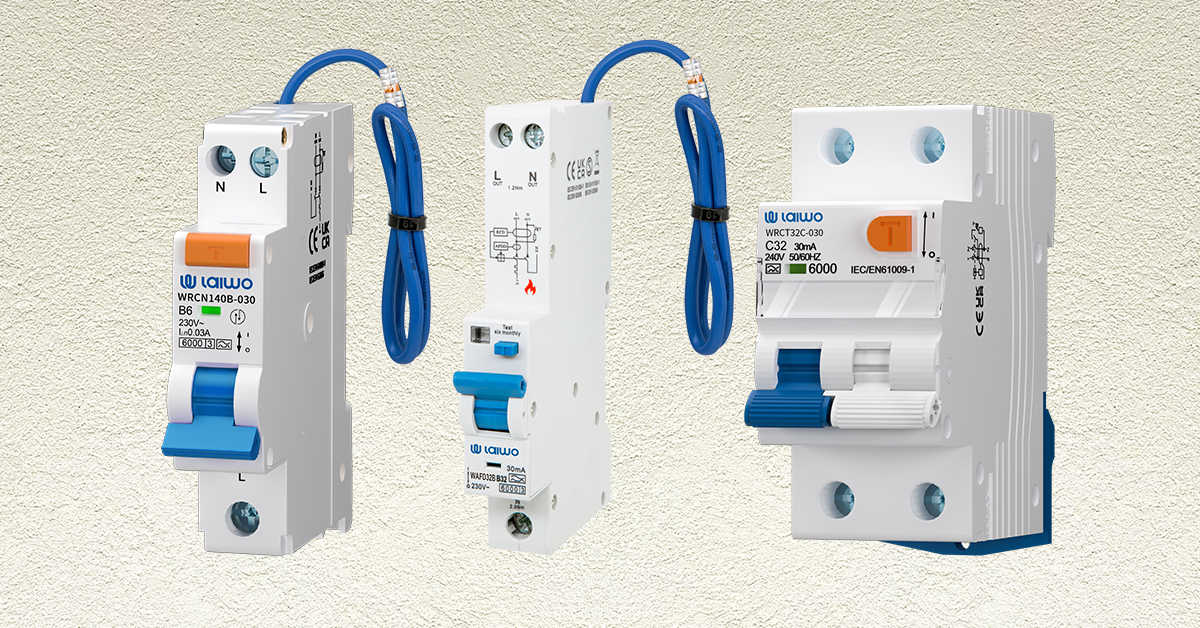
To understand the shift in installation practices, it is essential to first clarify what an RCBO brings to the distribution board compared to traditional components.
Historically, circuit protection was split into two distinct functions handled by two different devices. The MCB (Miniature Circuit Breaker) protected the cable from damage due to overload or short circuits. The RCD (Residual Current Device) protected living beings from electric shock by detecting earth leakage. In a typical split-load board, one RCD would protect a bank of several MCBs.
An RCBO combines these functions into a single, compact unit. It provides comprehensive protection against three types of faults:
Overload: Prevents cables from melting when too many appliances are used.
Short Circuit: Protects against massive current surges from direct faults.
Earth Leakage: Detects imbalances as small as 30mA to prevent fatal electric shocks.
An RCBO continuously monitors the flow of electricity along the phase and neutral conductors. In a healthy circuit, the current flowing out should equal the current returning. If the RCBO detects an imbalance (indicating current is leaking to earth, potentially through a person), it trips instantly. Simultaneously, its thermal-magnetic mechanism watches for overcurrents. By housing both sensing technologies in one module, the RCBO ensures that every individual circuit has its own dedicated guardian, independent of the others.
.jpg)
While safety regulations drive many changes in the industry, the move toward RCBOs is largely driven by practicality and logic on the job site.
The single biggest advantage of using one RCBO per circuit is complete fault discrimination. In a traditional dual-RCD board, if a fault occurs on a single socket circuit, the main RCD trips, taking out half the house. This often means the lights go out, the freezer stops running, and the Wi-Fi cuts off—all because of one faulty toaster.
With an RCBO setup, protection is granular. If the kitchen sockets develop a fault, only the kitchen socket RCBO trips. The lighting remains on, the fridge on a separate circuit keeps running, and the rest of the property is unaffected. This "minimization of inconvenience" is a massive selling point for customers and reduces the panic associated with electrical faults.
All electrical circuits have a small amount of natural earth leakage, especially those containing electronics with switched-mode power supplies (like computers, TVs, and LED drivers). In a split-load board, these small leakages accumulate across multiple circuits protected by one RCD. If the total background leakage nears the 30mA threshold, the RCD becomes unstable and prone to "nuisance tripping."
RCBOs solve this by spreading the leakage across individual devices. Each RCBO only deals with the leakage of its specific circuit, keeping the total well below the trip threshold. This makes the installation far more robust and reliable.
For an electrician, time is money. When called to a property where "the power has gone off," a board full of RCBOs offers an immediate diagnosis. The electrician opens the cover and sees exactly which lever is down. "It's the downstairs sockets." Diagnosis is instant.
Contrast this with a split-load board where the main RCD has tripped. The electrician must then switch off all MCBs, reset the RCD, and switch them back on one by one to find the culprit. This process is tedious and stressful for the homeowner. RCBOs eliminate the guesswork.
Learn More:
How to Stop Your RCD from Tripping
Top 5 Circuit Breakers Electricians Prefer in 2025
RCBO vs MCB + RCCB: What's More Practical for Electricians?
RCBO Safety Issues: Causes, Solutions, and Best Practices for Electrical Professionals
Theoretical benefits are one thing, but how does this play out in the daily reality of site work?
Consider a common scenario: a heating element in an electric oven begins to fail, causing a slight earth leak once it reaches temperature. In a shared RCD system, when the oven trips, it plunges the kitchen, living room, and hallway into darkness. The homeowner is confused and frightened.
With individual RCBOs, the oven simply turns off. The lights stay on. The homeowner can clearly see that the oven has stopped working while everything else is fine, making the fault obvious and manageable until an electrician arrives.
Garden lighting and outdoor sockets are notorious for moisture ingress. It is not uncommon for heavy rain to cause an outdoor circuit to trip. If this outdoor circuit shares an RCD with the indoor freezer, a rainy night could mean waking up to spoiled food.
An RCBO on the outdoor circuit acts as a firewall. The rain trips the garden power, but the integrity of the crucial indoor circuits is preserved.
In modern home offices or commercial settings, power continuity is critical. Servers, routers, and desktop computers are sensitive to power loss. A fault in a desk lamp shouldn't crash a server. RCBOs ensure that a trivial fault on an accessory circuit doesn't bring down critical IT infrastructure.
Electricians push for RCBOs largely because they have dealt with the fallout of shared RCDs for years. The pain points are consistent and frustrating.
There is nothing worse than an emergency call-out at 10 PM because "everything is off." Often, this is caused by a cumulative leakage issue where no single appliance is faulty, but the sum of all appliances has tripped the main RCD. These intermittent faults are nightmares to diagnose. They waste hours of the electrician's time and erode the customer's trust.
With grouped RCD protection, fault finding is a process of elimination. The electrician has to disconnect neutrals from the busbar to isolate circuits for insulation resistance testing. This involves unscrewing terminals, pulling wires, testing, and then reconnecting—a process that introduces the risk of loose connections or damaged conductors. RCBOs allow for testing of individual circuits often without dismantling the board, saving massive amounts of time.
Customers do not understand "split load" arrangements. They only understand that their kettle tripped the breaker and now the TV won't turn on. They perceive this as a "bad electrical system." By installing RCBOs, the system behaves logically: if the kettle breaks, the kettle socket turns off. This aligns with customer expectations and reduces angry phone calls.
Beyond troubleshooting, the use of RCBOs contributes to a cleaner, more professional overall installation.
RCBO boards are generally tidier. Because each device handles its own Neutral connection (via a flying lead or busbar clip), there is less clutter on the main Neutral bars. The wiring logic is linear: Phase and Neutral go to the device. This makes the board easier to dress, easier to label, and significantly easier for another electrician to understand during future inspections.
Wiring regulations (such as BS 7671 in the UK) place a heavy emphasis on minimizing danger and inconvenience in the event of a fault. While dual-RCD boards are still permitted, they are increasingly seen as the bare minimum. Regulations strongly recommend dividing installations so that a single fault does not cause widespread power loss. RCBOs are the most effective way to satisfy this requirement for "division of installation."
Learn More: Why Certifications Matter for Distribution Boxes, Breakers, and Fuses
Today's homes are power-hungry. We have EV chargers, solar inverters, heat pumps, and extensive home automation systems. These high-load, complex devices do not play well together on shared RCDs. A dedicated RCBO for an EV charger or heat pump is often mandatory, but extending that philosophy to every circuit ensures the entire electrical ecosystem remains stable.
Learn More:
Circuit Breaker for EV Charger – What You Need to Know
Why RCBOs Are a Must-Have in Modern Distribution Boards
To provide a balanced view, it is important to acknowledge why RCBOs weren't the standard sooner.
The primary barrier has always been cost. An RCBO is a complex piece of engineering, effectively combining two devices into one. Consequently, populating a 10-way board with 10 RCBOs is significantly more expensive than using 10 cheap MCBs and two RCDs. However, the gap is closing. As manufacturing scales, the price of RCBOs has dropped, and when labor savings on fault-finding are factored in, the total cost of ownership becomes very competitive.
Physically, older RCBOs were bulky, sometimes occupying two module widths or being much taller than standard MCBs, making wiring tight. However, modern "compact" RCBOs are now the same size as a standard single-pole breaker. While they do require a functional earth connection (the "fly lead"), modern boards are designed with ample space to accommodate this.
While RCBOs are superior, they are particularly critical in specific environments:
Residential Consumer Units: To prevent nuisance tripping and ensure household convenience, especially in homes with many appliances.
Commercial Installations: Offices cannot afford downtime. Losing power to a bank of computers because a coffee machine tripped is
unacceptable.
Outdoor Circuits: External power is high-risk for moisture faults. It should always be separated from internal circuits.
Mission-Critical Systems: Smoke alarms, medical equipment, and security systems should never share protection with general power circuits.
The electrical industry is moving towards a "safety-first, convenience-first" mindset. The dual-RCD board served its purpose as a cost-effective transition from fuses, but it is no longer the best solution for modern living.
Installing one RCBO per circuit offers the ultimate in fault isolation. It protects the client from nuisance outages, protects the electrician from difficult troubleshooting, and ensures the installation meets the highest standards of reliability. For the professional electrician, the peace of mind that comes from knowing a customer won't call at midnight because "the whole house is dark" is worth every penny of the extra hardware cost.
Learn More:
Breaking Capacity of Circuit Breakers: MCB, RCBO & RCCB Guide
RCBO Market: Size Trends, Growth Drivers & Forecast (2022-2033)