

It’s a common question in the electrical engineering and installation field:
“If the current rating is the same, can an AC-rated fuse be used in a DC circuit?”
At first glance, the answer may seem obvious to a novice technician or a purchasing manager looking to substitute parts. The fuse has the same amp rating, and it serves the same protective purpose—to break the circuit during an overload or short circuit. So why not?
The truth is:
Current rating alone is not enough to determine a fuse's suitability for a DC application.
In DC (Direct Current) systems, the voltage interruption behavior is completely different from AC (Alternating Current) systems. Using an AC-rated fuse in a DC application is a serious violation of electrical safety principles and can lead to incomplete fault interruption, severe overheating, arc continuation, and catastrophic fire hazards.
To choose the right fuse, electricians, system integrators, and design engineers must understand the fundamental difference between AC and DC fault interruption, not just the amperage on the label.
1. Why the Same Current Rating Does NOT Mean the Fuse Is Suitable
2. Why DC Circuits Are Harder for Fuses to Interrupt
3. What Happens If You Use an AC Fuse in a DC Circuit
4. Why DC-Rated Fuses Are Different
5. Real Installation Scenarios Where This Mistake Happens
6. Common Electrician Misunderstandings
7. How to Choose the Correct Fuse for DC Applications
8. Frequently Asked Questions (FAQ)
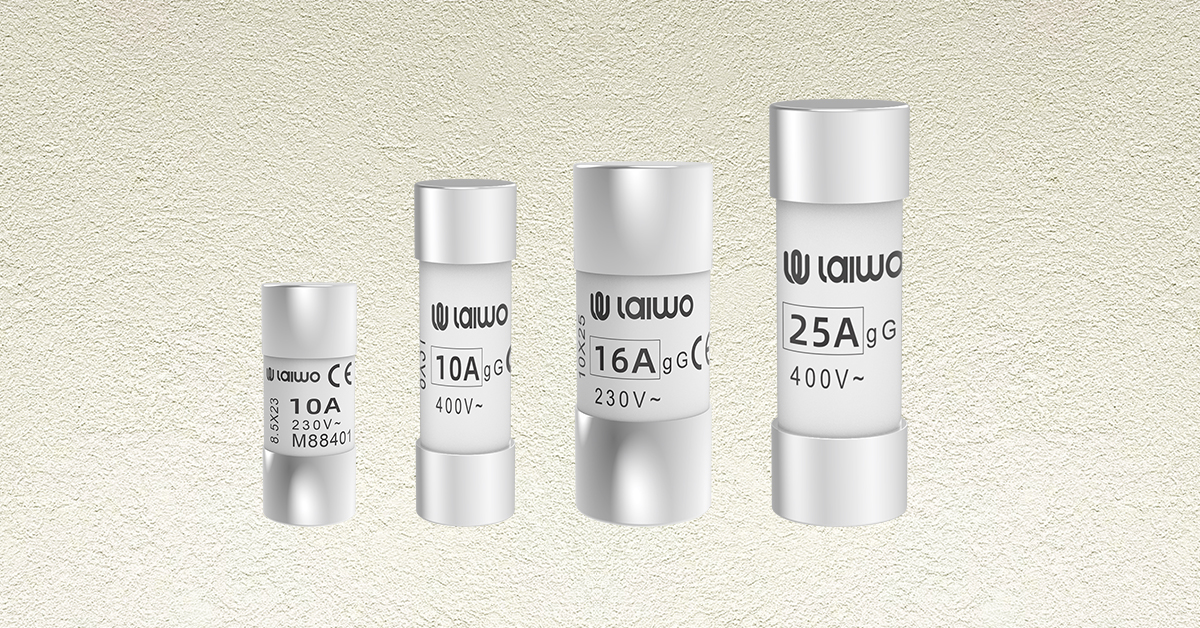
The amp rating stamped on the side of a fuse indicates the continuous current the fuse can handle under normal operating conditions, as well as the overload threshold at which the internal element will begin to melt. For example, a 100A fuse is designed to carry 100 amps continuously without blowing.
However, the amp rating does not indicate the fuse's voltage handling ability or its arc interruption capability. These two factors are the real deciding factors when protecting DC circuits.
A fuse is a safety device. Its job is not just to melt, but to safely interrupt fault current and isolate the circuit. It must do this under the specific voltage characteristics of the system, whether that is AC voltage or DC voltage.
Even at the exact same current level (e.g., a 50A fault), a DC fault is inherently much harder to interrupt than an AC fault.
In AC circuits, the current reverses direction periodically. In a standard 50Hz or 60Hz system, the current drops to zero 100 or 120 times per second, respectively. This phenomenon is known as the "zero crossing."
When an AC fuse blows and an electrical arc forms inside the fuse body, this natural zero crossing helps extinguish the arc. The momentary lack of current flow allows the insulating medium inside the fuse to cool and suppress the arc, effectively opening the circuit safely.
In DC circuits, the situation is completely different. The current flows continuously in one direction at a constant level. There is no zero crossing.
This means that once an arc is struck inside the fuse, the arc is sustained by a continuous supply of energy. The arc continues much longer after the fuse element melts because the DC voltage acts like a constant pressure pushing the current across the gap.
If the fuse is not specifically DC-rated and designed to handle continuous arcing energy, the arc may not extinguish. The gap created by the melted element becomes conductive due to the superheated ionized gas (plasma) of the arc. The fuse fails to isolate the fault, creating severe electrical and thermal safety risks.
When a fault occurs in a DC circuit protected by an AC fuse, the overcurrent will cause the internal metal element to melt just as it should. But melting is only the first step. Because of the lack of a zero-crossing, the electrical arc continues to burn across the melted gap. The current may keep flowing through the plasma arc.
This means the circuit is not truly protected. The fault remains active.
When arc interruption fails, the massive energy of the continuous arc is converted into heat. Heat builds up rapidly inside the fuse body. Because the AC fuse was never designed to absorb or quench this level of sustained thermal energy, the fuse body may rapidly overheat, warp, melt, or shatter.
This extreme heat can severely damage the fuse holders, the surrounding wiring, and nearby electronic components inside the panel.
This is the biggest danger in using the wrong fuse rating. The fuse appears to operate (it blows), but the fault persists through the arc.
The continuous arcing and extreme temperatures can quickly ignite surrounding plastics and insulation. This can lead to catastrophic insulation failure, electrical fires, and complete destruction of the equipment the fuse was supposed to protect.
To combat the challenges of continuous current, DC-rated fuses are structurally and chemically designed to extinguish longer arcs and handle continuous energy flow. To achieve this, engineers design DC fuses with specific features that AC fuses lack.
This may include a longer physical fuse body to stretch the arc, specialized silica sand or quartz filler material designed to melt and absorb the arc plasma rapidly, and a higher overall interruption rating (breaking capacity) optimized for DC faults.
A DC fuse is rigorously tested to interrupt specific DC voltages and defined DC fault currents. When you see "1000V DC" on a fuse, it means the manufacturer has proven that the internal design can safely quench an arc at that specific direct current voltage level under worst-case fault conditions.
This ensures reliable, predictable operation under real-world fault conditions.
Because of these design enhancements, DC fuses are critical components in modern high-voltage DC applications. You will find them heavily utilized in solar PV string combiner boxes, high-capacity battery energy storage systems (BESS), electric vehicle (EV) infrastructure, and industrial DC distribution networks.
It is unfortunately common on job sites. An installer is short on parts, looks in the truck, and sees an AC fuse with the same current rating and a similar physical size. They assume the AC fuse is acceptable to finish the job.
But PV systems may run at 600V DC, 1000V DC, or even 1500V DC. These voltages represent immense continuous arcing potential. An AC fuse used here is a ticking time bomb. Protecting these circuits requires special DC-rated PV fuses (often gPV class) designed specifically for solar strings.
Battery banks are unique because they can deliver very high DC fault currents—sometimes thousands of amps in a fraction of a second. Using an AC fuse or an incorrectly rated fuse in a battery circuit can cause a sustained arc and severe overheating, potentially leading to a thermal runaway event in the battery rack.
The misconception isn't limited to high voltage. Even low-voltage DC circuits (like 24V or 48V control circuits) require correct DC fuse ratings. While the arcing risk is lower at 24V than at 1000V, using an AC-only glass fuse in a DC control circuit can still lead to unreliable operation and nuisance issues.
This is the most common and dangerous mistake in electrical procurement and maintenance. Amperage is about carrying current; voltage rating is about breaking current safely.
Amp rating ≠ safe DC protection.
Fuses are often standardized into specific physical dimensions (like 10x38mm or Class J). Just because an AC fuse physically snaps into a DC fuse block does not mean it is safe. Mechanical fit does not mean electrical compatibility.
Some technicians might claim they’ve used AC fuses on DC equipment before without issue. This is a dangerous fallacy because the fuse may work perfectly fine under normal, daily load conditions. The catastrophic failure only occurs when a fault happens—and a safety device that fails when you need it most is useless.
Learn More: What is the difference between a fuse and a MCB?
Always verify the DC voltage rating on the fuse label and compare it against the maximum system voltage of your installation. The fuse must be rated equal to or above the actual DC voltage of the circuit. For example, a 600V DC system requires a fuse rated for at least 600V DC.
The fuse must safely interrupt the maximum expected DC fault current. Check the fuse's Interrupting Rating (IR) or Breaking Capacity. It must exceed the short-circuit current available from the power source (like a battery bank or solar array).
Modern electrical standards designate specific fuse classes for specific jobs. Use PV fuses (gPV) for solar strings. Use specialized high-speed battery fuses (aR or gR classes rated for DC) for energy storage systems and inverters.
Consider the installation environment. Ambient temperature, enclosure design (which traps heat), and continuous load characteristics all affect a fuse's performance. Proper derating calculations must be applied for extreme environments.
Q1: Can I use a DC fuse in an AC circuit?
Generally, yes. A fuse rated for a specific DC voltage is usually capable of interrupting AC faults at or below that same voltage, because AC faults are easier to interrupt (due to the zero crossing). However, you should always consult the manufacturer's datasheet to confirm the AC ratings and ensure compliance with local electrical codes.
Q2: How do I know if a fuse is rated for DC?
Look at the markings on the fuse body. It must explicitly state a DC voltage rating, such as "1000V DC" or "Vdc". If it only lists "VAC" or "~", it is an AC-only fuse.
Q3: Why are DC fuses often physically longer than AC fuses?
Because DC arcs are harder to extinguish and do not self-extinguish at a zero-crossing, the fuse requires a longer internal element path to physically stretch, cool, and break the continuous DC arc.
Q4: Are automotive blade fuses AC or DC?
Automotive blade fuses (like ATO, ATC, MAXI) are strictly DC-rated, typically for 12V, 24V, or 32V DC systems. They are designed for the continuous current environments of vehicles.
Q5: What is a gPV fuse?
A gPV fuse is a specialized class of DC fuse designed specifically for the protection of Solar Photovoltaic (PV) systems. They are engineered to clear low-level DC overcurrents (like reverse currents from shaded solar panels) very quickly.
Learn More: Fuse Symbols in Electrical Systems
No — not just because the current rating is the same.
Because in DC circuits, arcs last longer, interruption is significantly harder, and standard AC fuses may fail to protect the equipment, leading to catastrophic overheating and fires.
The correct rule of thumb for any electrical professional or B2B buyer is:
Always match both the current rating AND the specific DC voltage rating.
For solar installations, battery energy storage, and industrial DC networks, always use a properly DC-rated fuse for reliable and safe protection. Protecting your infrastructure with the correct components prevents expensive downtime, ensures regulatory compliance, and most importantly, saves lives.