Next: Knife Blade Fuse vs Cylindrical Fuse: What's the Difference?



When sourcing low-voltage industrial fuses, many electricians, distributors, and panel builders inevitably encounter two very similar names on specification sheets and supplier catalogs:
At first glance, examining them side-by-side on a workbench, they appear completely identical. They feature the same rectangular ceramic body, the same solid metal knife blades protruding from the ends, and the same visual trip indicators. In fact, many global suppliers and OEM manufacturers even label their products with a combined designation:
NT(NH) Fuse Link
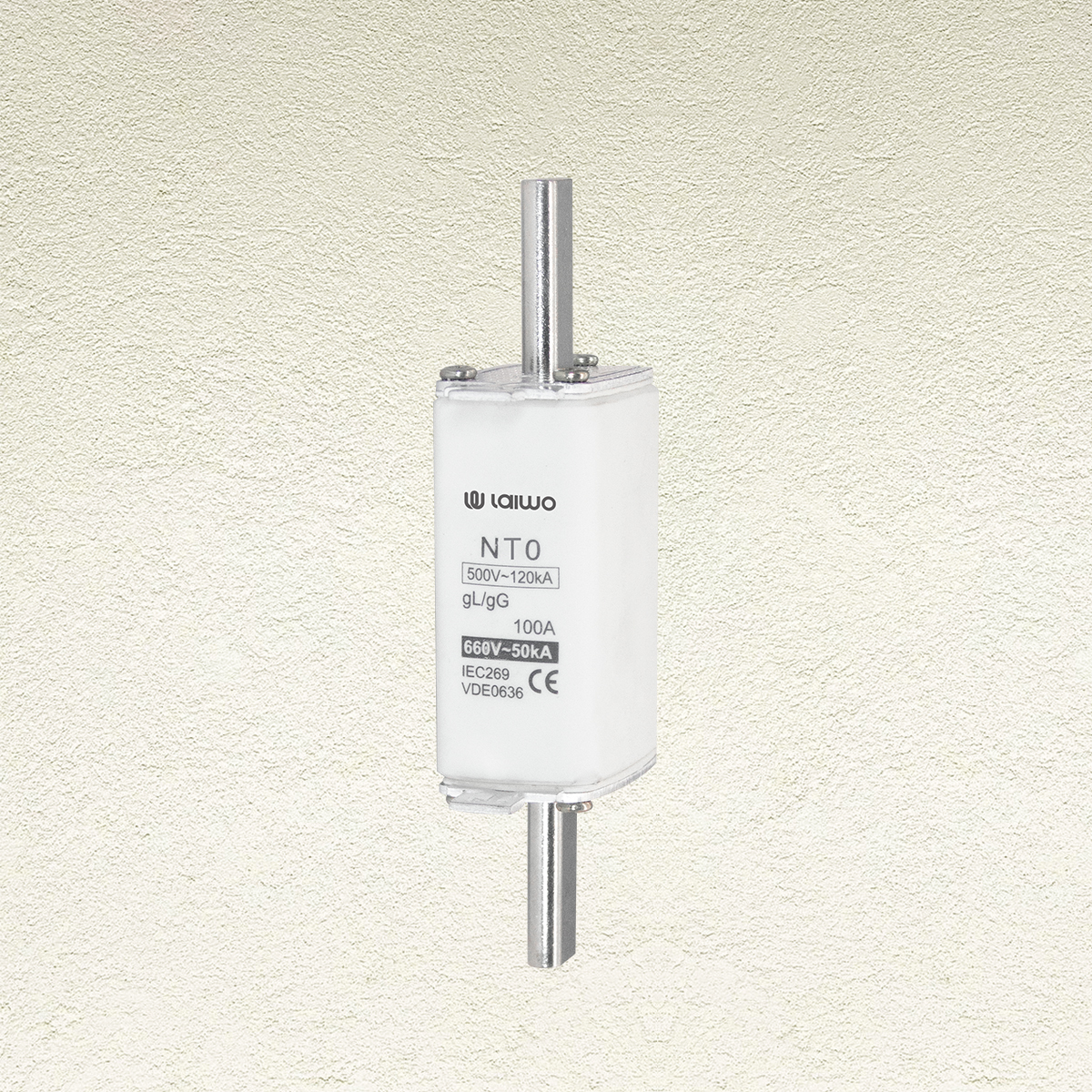
This widespread labeling practice leads to several pressing questions for procurement professionals and electrical engineers:
The Quick Answer:NT and NH fuse links are highly compatible and often physically identical, but there are important differences in naming origins, standard recognitions, applications, and procurement considerations. NT fuse links are the commonly used naming convention in Asian markets (specifically China), while NH fuse links are the universally recognized terminology under international IEC and German DIN standards.
This comprehensive B2B guide explains the key technical and market differences to help electricians, panel builders, and B2B buyers choose the correct low-voltage fuse link for demanding industrial and power distribution systems.
An NH fuse link is a heavy-duty industrial overcurrent protection device. In technical engineering terms, it is classified as a:
It is widely utilized across the globe for:
The term NH actually originates from the German language. It stands for “Niederspannungs-Hochleistungs”, which directly translates to low-voltage high-performance fuse. Because German DIN standards (specifically DIN 43620) defined the physical dimensions of these fuses decades ago, the German acronym stuck and became the global standard.
To provide high breaking capacity (often up to 120kA), NH fuse links are meticulously constructed. They usually include:
Because of their blade design, they cannot be wired directly. They must be installed securely in:
Because they can handle currents from 2A all the way up to 1250A or more, NH fuse links are widely used in:
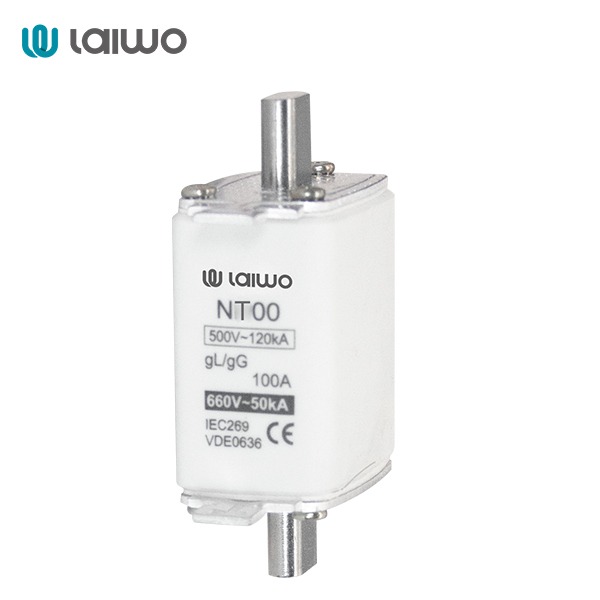
An NT fuse link is generally the exact same concept as an NH fuse link. It is:
In the vast majority of electrical engineering contexts:
NT fuse = NH-style fuse
When manufacturing boomed in Asia, localized naming conventions were established. The "NT" prefix became the standard domestic identifier for this exact style of fuse. Today, export-oriented manufacturers frequently describe their products as NT(NH) Fuse Link because they share the identical dimensions, performance curves, and IEC testing standards as their European NH counterparts.
Unsurprisingly, because they conform to the same physical dimensional standards (DIN 43620), NT fuse links typically feature the exact same structural components:
The construction, weight, and internal metallurgy are generally very similar to NH fuse links, provided they are manufactured by a reputable brand.
Within the markets that use this terminology, NT fuse links are commonly used in:
While physically similar, understanding the nuances between NT and NH is crucial for international sourcing, SEO keyword targeting, and cross-border engineering projects.
| Feature | NT Fuse Link | NH Fuse Link |
|---|---|---|
| Naming Origin | China / Asia domestic standards | Europe / Germany (DIN) |
| Standard Naming | Local market terminology | Official IEC/DIN terminology |
| Global Recognition | Medium (Mostly Asia/Africa) | High (Universally recognized) |
| OEM Labeling | Often labeled as NT or NT(NH) | Strictly labeled as NH |
For international engineering projects, panel exports, or tenders:
NH fuse link is the far more widely recognized and accepted term. Using "NH" in documentation prevents confusion during commissioning and maintenance.
To guarantee safety and performance, both NT and NH fuse links must undergo rigorous laboratory testing. Most high-quality NT and NH fuse links comply with the exact same global standards:
However, NH fuse links are usually marketed directly emphasizing their IEC/DIN compliance. NT fuse links are often localized naming versions that may refer to equivalent national standards (like GB/T 13539 in China), which are themselves direct translations of IEC 60269.
In most practical, real-world cases, there is little to no physical difference between an NT and an NH fuse from the same manufacturer. Both typically feature:
Because they are based on the identical DIN 43620 dimensional blueprint, the sizing structures are directly interchangeable. A fuse base designed for an NH fuse will perfectly accept an NT fuse of the equivalent size.
| NT Size Designation | Equivalent NH Size Designation | Typical Current Range |
|---|---|---|
| NT00 / NT000 | NH00 / NH000 | 2A to 160A |
| NT1 | NH1 | 63A to 250A |
| NT2 | NH2 | 125A to 400A |
| NT3 | NH3 | 315A to 630A |
| NT4 | NH4 | 500A to 1250A |
Provided they follow the exact same IEC dimensions, an NT00 is a perfect dimensional match for an NH00.
The choice between searching for NT or NH largely depends on geography and historical trade routes:
| Global Market | Preferred Terminology |
|---|---|
| Europe | NH Fuse Link (Strictly) |
| Middle East | NH Fuse Link |
| Africa | NH / NT (Used interchangeably) |
| China | NT Fuse Link (Domestic standard) |
| Southeast Asia | NT / NH (Highly mixed usage) |
For maintenance teams and electricians facing downtime, the good news is that NT and NH fuse links are usually perfectly interchangeable. However, this is only true if the following core specifications are strictly identical:
Pro Tip:Never replace a blown fuse simply based on physical size. An NH1 fuse can be rated for 250A, but an identical-looking NH1 fuse could be rated for 63A. Always read the print on the ceramic body!
Before swapping an NH fuse for an NT fuse (or vice versa), always systematically verify:
A very common and dangerous mistake electricians make is:
only checking the amp rating (e.g., "I need a 160A fuse")
While entirely ignoring the short-circuit capacity, the utilization class, and the system voltage. If you replace a 160A aM (motor protection) fuse with a 160A gG (general protection) fuse, the high starting inrush current of the electric motor will blow the new gG fuse immediately.
Ignoring these parameters may directly lead to:
When engineering firms design large-scale infrastructure, mining facilities, or commercial power grids, international projects almost always specify:
NH fuse link
This strict preference occurs because the "NH" terminology directly aligns with globally accepted IEC standards, European panel design conventions, and the formal industrial procurement language used by major brands like Siemens, ABB, and Schneider Electric.
For global supply chains, consistency is key. B2B buyers and multinational distributors may find that standardizing on the NH terminology provides:
If you open a distribution panel in South America, the Middle East, or Australia, you will find that many industrial fuse holders and switch disconnectors have sizing charts molded directly into the plastic. These components are universally labeled:
They are rarely, if ever, labeled with "NT". Using NH-designated fuses ensures that field technicians feel confident they are using the manufacturer-intended components for that switchgear.
Even experienced electrical contractors can fall into costly traps when sourcing or replacing knife blade fuses.
While the dimensional standards are identical, not every product follows the standard strictly, especially at the lower end of the market. Low-cost, unverified NT versions from generic suppliers may differ drastically in invisible ways:
The two letters printed on the fuse are arguably the most important data point after the amperage. Different fuse classes include:
Choosing the wrong category fundamentally reduces protection performance and guarantees either nuisance tripping or destroyed equipment.
Before buying bulk fuse links, always check:
fuse base and disconnector compatibility
Ensure the silver-plated contacts on the fuse link match the gripping jaws of the fuse holder. Incorrect fitting, often caused by trying to jam a Size 1 fuse into a Size 00 base, or using cheap, warped bases, may rapidly cause:
For B2B buyers, procurement managers, and electrical engineers, selecting the right supplier and product is paramount. Follow these structured guidelines.
Ensure the product you are sourcing matches the exact end-use environment of your customer or facility.
| Application Type | Recommended Fuse Class |
|---|---|
| Industrial switchgear & general power | NH / NT gG |
| Heavy motor protection (pumps, fans) | NH / NT aM |
| Power electronics & Semiconductor protection | NH / NT aR |
| Solar PV & battery DC energy storage | DC-rated NH fuse (e.g., gPV) |
Quality cannot be determined by looking at the ceramic. You must demand documentation. Choose fuse links that are strictly compliant with:
For large industrial projects, B2B procurement should prioritize manufacturers that offer:
In the vast majority of practical, day-to-day electrical applications, NT fuse links and NH fuse links are functionally identical and entirely interchangeable. They share the same roots in DIN standards, the same physical footprint, and the same robust high-rupturing capabilities.
The ultimate takeaway for buyers and engineers is recognizing that the biggest difference is simply market terminology:
When evaluating a fuse for your next project, do not get hung up purely on the NT vs NH prefix. The real selection criteria for safety and performance should always be:
By understanding these parameters and choosing the correct, high-quality fuse link from a reputable manufacturer, you actively improve:
Physically and technically, they are usually identical and follow the same IEC 60269 standards. The difference lies primarily in the naming convention: "NH" is the European/International standard term, while "NT" is a localized term commonly used in Asian markets.
Yes, in most cases they are fully interchangeable, provided that the rated current, voltage rating, fuse size (e.g., NH00 vs NT00), breaking capacity, and utilization category (e.g., gG, aM) perfectly match.
NH stands for "Niederspannungs-Hochleistungs", a German term that translates to "low-voltage high-performance" fuse. It is synonymous with low-voltage high rupture capacity (HRC) fuses.
Both NT and NH fuse links are governed by the international standard IEC 60269, and specifically conform to DIN 43620 for their physical dimensions and knife-blade structures.
gG is for general purpose cable and line protection; aM is for motor short-circuit protection (allows for high starting currents without blowing); aR is for ultra-fast semiconductor and power electronics protection.
The most common AC voltage ratings are 500V and 690V AC. There are also specific DC-rated NH fuses for solar PV and battery storage applications ranging from 250V up to 1500V DC.
Because the products are physically and functionally identical, Asian manufacturers often label them as "NT(NH)" to satisfy both domestic buyers who search for "NT" and international export buyers who specifically require "NH".
The size corresponds to the physical dimensions of the fuse body and its maximum current carrying capability. You must choose the size that physically fits your existing fuse base. For example, NH00 typically covers up to 160A, NH1 up to 250A, NH2 up to 400A, and NH3 up to 630A.
Need Reliable Industrial Fuses for Your Next Project?
Ensure maximum safety and compliance with our premium range of IEC/DIN certified NH and NT fuse links. Whether you are a panel builder, OEM manufacturer, or electrical distributor, we provide high-quality HRC fuses with verified breaking capacities.
Contact our technical sales team today for bulk quotes, specification sheets, and expert cross-reference consultation!