

When selecting low-voltage fuses for electrical systems, electricians and panel builders often compare two common options on the market: bottle fuses and cylindrical fuses.
(1).jpg)
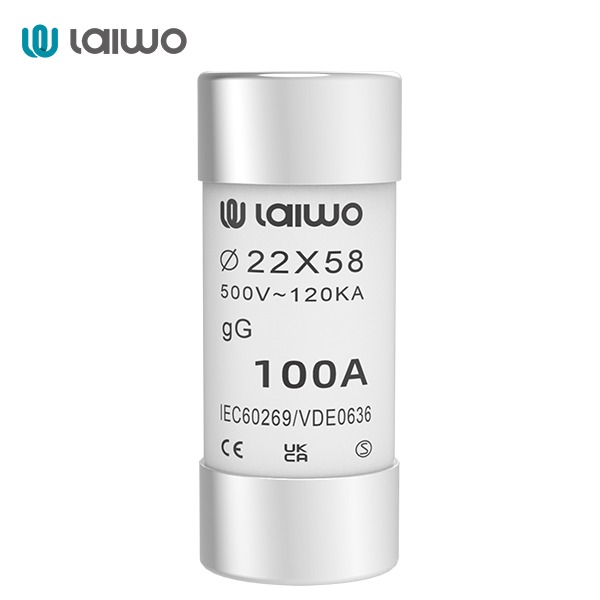
Although both types of fuses are expertly designed to provide crucial overload protection and essential short-circuit protection, they differ significantly in their core physical characteristics and operational deployment. Specifically, they vary vastly in their overall structure, their required mounting method, standard current capacity limits, general maintenance convenience, and optimal application scenarios.
Making a hasty or uninformed choice when procuring protective components can be disastrous. Choosing the wrong fuse type can result in severe overheating within the panel, poor protection coordination that jeopardizes expensive downstream equipment, difficult replacement procedures that increase system downtime, and ultimately, increased maintenance costs over the lifespan of the installation.
So, you must ask yourself:
Which fuse type is better for your application?
Should you use a bottle fuse or a cylindrical fuse?
This comprehensive guide explains the detailed differences between bottle fuses and cylindrical fuses to help electricians, panel builders, specialized distributors, and B2B procurement buyers make the right, standards-compliant decision for their next project.
Bottle Fuse vs Cylindrical Fuse: Key Differences
Why Bottle Fuses Are Still Used in Some Systems
Why Cylindrical Fuses Are More Popular in Modern Electrical Systems
Common Electrician Mistakes When Choosing Between Fuses
How to Choose the Right Fuse Type for Your Application
Which Fuse Type Is Better for Solar and Renewable Energy Systems?
Final Thoughts: Bottle Fuse vs Cylindrical Fuse
Frequently Asked Questions (FAQ)
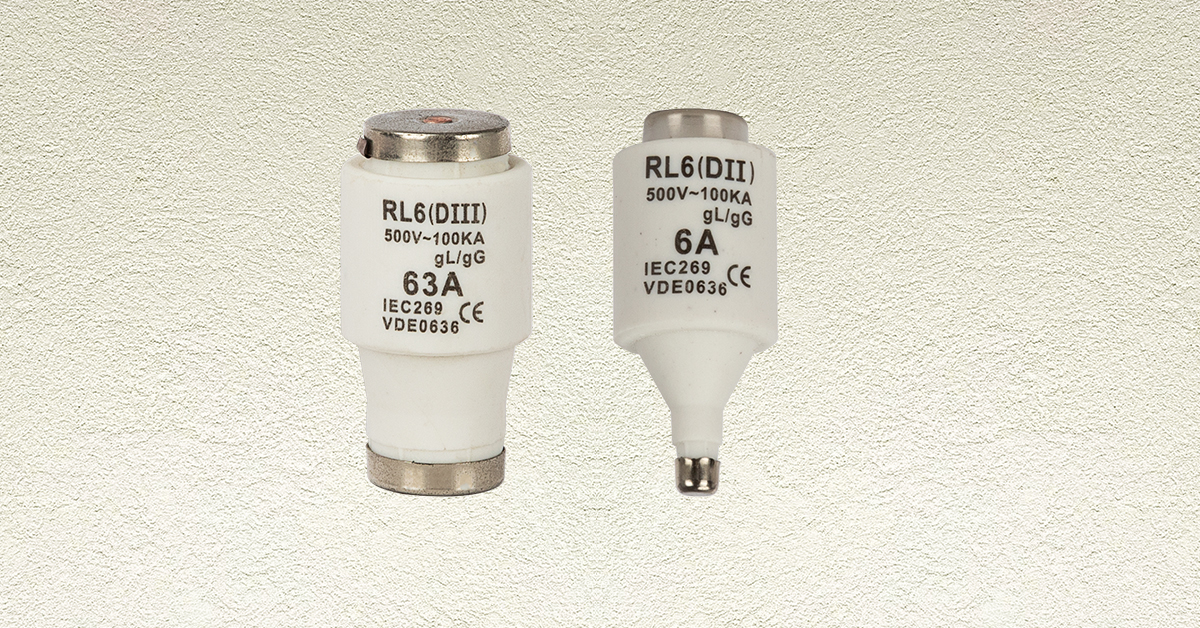
A bottle fuse (also broadly referred to as a Diazed fuse or D-type fuse depending on regional terminology) is named for its distinctive physical geometry. It features a unique bottle-shaped ceramic body that is built to withstand high temperatures and thermal shock during short-circuit events. The fuse relies on a threaded base design which fundamentally requires a screw-in installation method.
To function correctly within an electrical board, it usually consists of multiple interacting parts. You will find the fuse link (the actual protective element that melts), a fuse carrier (the screw cap holding the fuse), the fuse base (mounted in the panel), and an adapter ring (gauge ring). The threaded design helps significantly reduce incorrect fuse installation by ensuring a snug, mechanically secure fit.
Due to their robust, historical design, bottle fuses are highly versatile in handling different loads. They are commonly available in ratings ranging from 2A to 100A+, effectively covering everything from standard lighting circuits to main distribution boards in older architectures. Furthermore, typical voltage ratings include 230V for single-phase circuits, 400V for standard three-phase systems, and up to 500V for higher industrial loads, depending heavily on the specific system design and manufacturer specifications.
Historically, D-type fuses were the gold standard for robust electrical protection. Bottle fuses are widely used in older residential systems, classic commercial buildings, traditional European electrical installations, and numerous legacy distribution boards that have not yet been upgraded to modern circuit breakers or modular fuse configurations. You will find them heavily represented especially in Germany, extensive parts of Eastern Europe, and older low-voltage infrastructure worldwide that stems from mid-20th-century engineering standards.
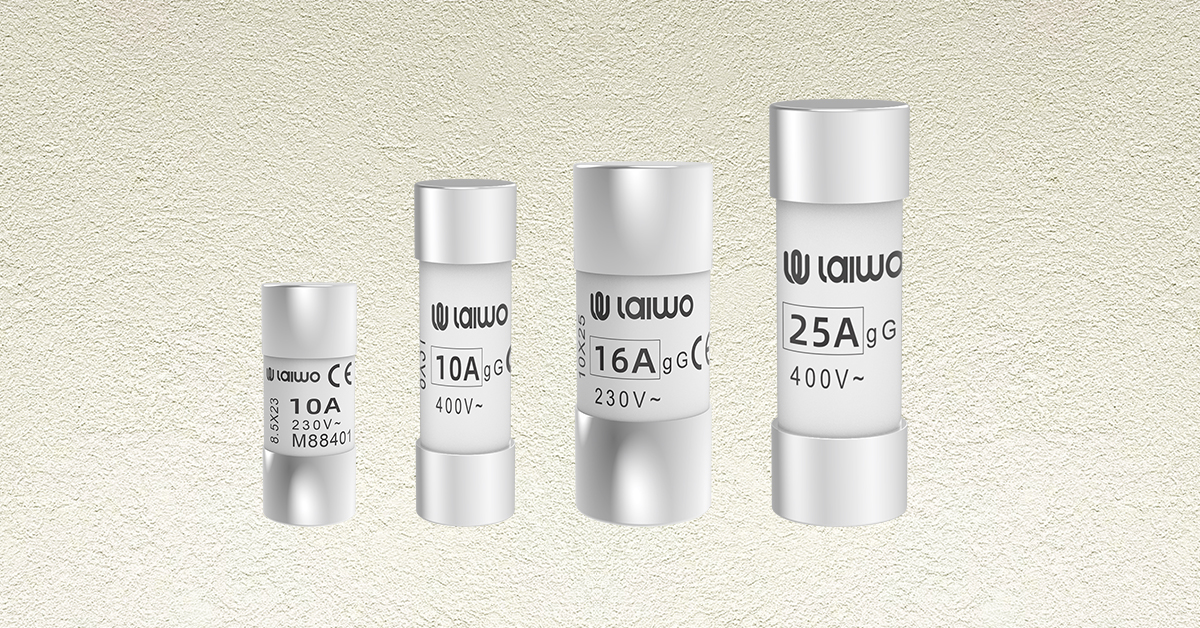
In contrast to the multi-part threaded configuration, a cylindrical fuse offers a highly streamlined, modern approach to electrical protection. It uses a clean, tubular ceramic or glass body flanked securely by metal end caps at both ends. This results in a highly compact cartridge design that minimizes footprint without sacrificing high breaking capacity.
Because of this form factor, it does not screw into a socket. Instead, it is typically installed securely inside spring-loaded fuse holders or specialized DIN rail fuse bases that allow for rapid insertion and removal without touching live parts.
Cylindrical fuses cater well to modern low-voltage load requirements. Depending on the physical dimensions (such as 10x38mm, 14x51mm, or 22x58mm), common cylindrical fuse ratings include 2A, 10A, 32A, 63A, and up to 125A, depending on the specific fuse size and standard class (like gG or aM).
Thanks to their sleek profile, these fuses are heavily favored in contemporary engineering. They are widely used in modern distribution boards, tight and heavily populated industrial control panels, expanding solar PV systems, photovoltaic combiner boxes, and advanced battery energy storage systems (BESS) where real estate inside the enclosure is highly valuable.
The core differences between these protective devices begin with their physical form factor, which dictates how they are handled, stored, and installed in the field.
| Feature | Bottle Fuse (D-Type/Diazed) | Cylindrical Fuse (Cartridge) |
|---|---|---|
| Shape | Bottle-shaped ceramic shell | Tubular with metal end caps |
| Installation | Screw-in mechanism | Clip-in holder or DIN base |
| Mounting | Threaded base socket | Modular fuse holder |
| Replacement | Manual screw removal required | Quick replacement via hinged carrier |
When labor costs and panel downtime are critical factors, installation speed matters. Bottle fuses naturally require screw-in installation. Because you must remove the cap, ensure the gauge ring is correct, and thread it back in carefully to avoid cross-threading, it generally may take longer to replace.
Conversely, cylindrical fuses support faster installation directly into pre-wired DIN rail systems. Electricians simply flip open the modular holder, swap the cartridge, and snap it shut. For professional electricians dealing with dozens of circuits: cylindrical fuses often save substantial installation time.
Safety against human error is a major consideration. Bottle fuses often include specialized adapter rings (gauge rings) which act as a mechanical current-rating limitation design. This physically blocks a larger-rated fuse from being screwed into a lower-rated base, which perfectly helps prevent installing oversized fuses that could cause electrical fires.
On the other hand, cylindrical fuses usually rely entirely on correct fuse holder matching and the electrician's knowledge. While dimensions scale up slightly with higher amperages, it is easier to incorrectly place a higher-rated fuse into a holder of the same size class if not paying attention.
In modern panel building, miniaturization is key. Cylindrical fuse systems are generally more compact and easier to integrate into modern panels that utilize high-density DIN rail layouts. Standardizing on cylindrical holders allows panel builders to fit more circuits into a smaller enclosure. Bottle fuses, due to their broad bases and screw caps, inherently require larger installation space, making them cumbersome for complex industrial control systems.
For ongoing plant maintenance, facility managers must consider the speed of restoring power. Cylindrical fuses are often preferred because they allow for quicker replacement and offer much easier access in tightly packed control panels, often featuring visible blown-fuse LED indicators on the holder. Bottle fuses may require more manual handling, unthreading, and physical space for a gloved hand to grip the carrier properly.
| Application Environment | Recommended Fuse Type |
|---|---|
| Older residential systems | Bottle fuse |
| Modern distribution boards | Cylindrical fuse |
| Solar PV combiner boxes | Cylindrical fuse |
| Industrial control panels | Cylindrical fuse |
| Legacy European systems | Bottle fuse |
Despite the rise of modular DIN components, many older electrical systems globally were designed exclusively around bottle fuse technology. For facilities like historical manufacturing plants or aging apartment complexes, replacing entire distribution systems just to upgrade the fuse style may not be economically practical or technically feasible without total rewiring.
As previously mentioned, safety constraints in public access panels are paramount. Bottle fuse systems often reduce incorrect fuse rating replacement through their clever mechanical adapters. A tenant or untrained maintenance worker physically cannot insert an 80A bottle fuse into a 16A socket, significantly reducing fire hazards.
Regional electrical codes and established engineering habits play a huge role. D-type bottle fuses are still highly standard and commonly used in places like Germany, Austria, and vast parts of Eastern Europe, where local standards (like VDE) have long supported and regulated their reliable performance for decades.
Time is money in modern contracting. Cylindrical fuses utilizing DIN rail fuse holders allow for considerably easier installation during panel assembly. They result in quicker maintenance during breakdowns, and ultimately promote cleaner, more organized panel layouts that are visually pleasing and easier to trace during troubleshooting operations.
The standard architecture of commercial electricity has shifted towards modularity. Modern DB (Distribution Board) boards often support and are explicitly designed for cylindrical fuse holders alongside modern MCBs and RCDs, making integration simpler and standardizing the aesthetic and physical profile of the panel components.
The explosion of the renewable energy sector has solidified the cylindrical form factor. Cylindrical PV (photovoltaic) fuses are commonly used as the gold standard in solar combiner boxes, advanced battery systems, and intricate inverter protection circuits. This is because they are inherently: compact enough for tight enclosures, DIN rail compatible for scalable arrays, and easy to replace rapidly in harsh outdoor field environments.
A frequent error by contractors used to legacy systems is trying to retrofit older fuse styles into new builds. This may immediately create severe installation difficulty due to footprint mismatch and lead to dangerously limited wiring space, preventing proper wire bending radii and restricting necessary thermal airflow within the panel enclosure.
Not all fuse holders support all fuse types, even within the cylindrical family. Electricians sometimes force incorrect fuse sizes (e.g., trying to fit a 10x38mm fuse into a 14x51mm holder using improvisations). Wrong matching can rapidly cause poor electrical contact, severe localized overheating, melting of the plastic holder, and ultimately, highly unreliable overcurrent protection.
When replacing a blown fuse, electricians sometimes carelessly ignore crucial metrics like the DC/AC voltage rating, the required breaking capacity (kA rating), and the specific installation environment. These parameters matter just as much as the baseline amperage to safely extinguish the electrical arc during a severe dead-short fault.
The easiest determining factor is the age and design of your current infrastructure. If you are servicing or replacing components in older systems: you will likely need a bottle fuse. If you are designing, building, or procuring for modern, modular systems: you should strictly default to a cylindrical fuse architecture.
Space constraints dictate component selection. Compact panels, motor control centers, and highly dense automation cabinets favor cylindrical fuse systems. Conversely, larger legacy systems or heavy-duty mains inputs with generous enclosure spacing may still comfortably support bottle fuses without penalty.
| Specific Application Scenario | Recommended Fuse Type |
|---|---|
| Residential retrofit (Pre-1990s) | Bottle fuse |
| Industrial automation panel | Cylindrical fuse |
| Solar PV array / strings | Cylindrical PV fuse (gPV class) |
| Modern commercial DB board | Cylindrical fuse |
Regardless of form factor, industrial buyers must ensure products rigorously comply with international safety benchmarks. Always verify adherence to relevant IEC standards (like IEC 60269) and specific regional electrical regulations (UL, VDE, CE) to guarantee liability protection and operational safety.
In the rapidly expanding photovoltaic market, engineers face unique challenges with high DC voltages. Most modern PV systems exclusively use cylindrical PV fuses (specifically designated with the gPV operating class). This dominance occurs because they offer incredibly compact installation for densely packed combiner boxes, feature easy DIN rail integration, and possess high DC compatibility capable of safely interrupting 1000VDC to 1500VDC arc faults effortlessly.
If you are attempting to protect modern solar strings, the answer is generally: not recommended. While they can conduct current, bottle fuses are fundamentally less optimized for specialized DC applications and their bulky nature completely disrupts the compact combiner box design required in modern commercial and utility-scale solar farms.
Ultimately, neither fuse type is universally “better” than the other in a vacuum. The correct choice depends entirely on your specific electrical system type, the physical installation space available, the ongoing maintenance needs of the facility, and the exact application environment.
In general:
Bottle fuses are significantly better for older, legacy systems where infrastructure changes are cost-prohibitive, and where mechanical misuse prevention is highly valued.
Cylindrical fuses are overwhelmingly better for modern power distribution, tight industrial automation, and cutting-edge solar applications requiring modularity.
Choosing the right fuse right from the procurement stage decisively improves:
overall electrical safety
panel builder installation efficiency
facility maintenance convenience
long-term system reliability
If you are a B2B buyer, panel builder, or distributor looking to secure high-quality electrical protection components, our engineering team is here to assist. We offer bulk procurement options and expert technical consultation to ensure you get exactly what your project demands.
Contact us today to review your schematics and request a competitive wholesale quote!
What is the main difference between a bottle fuse and a cylindrical fuse?
The primary difference is their physical design and mounting method. Bottle fuses have a threaded, bottle-shaped ceramic body that screws into a base, often featuring an adapter ring for safety. Cylindrical fuses are sleek, tubular cartridges that clip into modular, DIN rail-mounted fuse holders.
Are bottle fuses still allowed in new electrical installations?
Yes, in many regions (particularly in Germany and Eastern Europe), bottle fuses meet current IEC and local standards (like VDE) and are still perfectly legal. However, for new builds, engineers increasingly favor MCBs or cylindrical fuses due to space savings and modularity.
Can I physically replace a bottle fuse with a cylindrical fuse?
No, they are not mechanically interchangeable. You cannot fit a cylindrical cartridge into a threaded D-type socket. Upgrading from bottle to cylindrical requires an electrician to replace the entire fuse base assembly with a compatible DIN rail and cylindrical fuse holder.
Which fuse type is best for solar PV systems?
Cylindrical fuses (specifically gPV class) are by far the best choice for solar PV systems. They are specifically rated for high DC voltages (up to 1500VDC), easily interrupt DC arcs, and fit perfectly into the compact combiner boxes used in solar arrays.
What current ratings are generally available for each fuse type?
Both types cover standard low-voltage ranges excellently. Bottle fuses are typically found from 2A up to 100A (and sometimes higher for specialized types). Cylindrical fuses are commonly deployed in ratings of 2A, 10A, 32A, 63A, and 125A, depending on the cartridge dimensions (e.g., 10x38mm vs 22x58mm).
Are cylindrical fuses safer than bottle fuses?
Both are extremely safe when installed correctly. Bottle fuses actually have a slight edge in foolproof safety because their gauge rings physically prevent an operator from screwing a high-amp fuse into a low-amp circuit. Cylindrical fuses require the electrician to verify they are placing the correct amperage cartridge into the holder.
Do cylindrical fuses fit directly on DIN rails?
The fuse cartridge itself does not attach to a DIN rail; rather, it slots securely into a modular fuse holder. That modular fuse holder is specifically designed with a clip on the back to snap effortlessly onto standard 35mm DIN rails, making panel layout incredibly efficient.
What certifications should I look for when buying fuses?
Regardless of selecting bottle or cylindrical designs, B2B buyers should look for strict compliance with international standards such as IEC 60269. Depending on your target market, you should also seek out specific approvals like UL (for North America), CE (for Europe), VDE, or RoHS compliance for environmental safety.