Next: Ceramic vs Plastic Fuse Holders: Which One Should You Use?



Electric vehicle (EV) charging infrastructure has become one of the fastest-growing segments of the global electrical industry. As chargers grow more powerful, more connected, and more deeply embedded in critical urban infrastructure, protecting them from transient overvoltages is no longer optional—it is a core design requirement that drives compliance, uptime, and total cost of ownership.
Unlike conventional electrical installations, EV charging projects bring together multiple protection devices that must work as a coordinated system: surge protective devices (SPDs), RCBOs, MCBs, RCCBs, main switch disconnectors, and purpose-built distribution boards. A weak link in this chain can translate directly into charger downtime, damaged power electronics, failed inspections, voided warranties, and unhappy site owners.
This guide is written from a procurement intelligence perspective. Rather than promoting individual components, it explains how surge protection fits into the overall protection architecture of an EV charging station—helping distributors, importers, EPC contractors, consulting engineers, and procurement managers specify compliant, reliable, and commercially sound solutions.
1. Why Surge Protection Is Becoming Standard in EV Projects
2. Understanding the Complete Protection Architecture
3. Procurement Challenges for Distributors & EPCs
4. Common Surge Protection Problems in the Field
5. Selecting the Right SPD for EV Charging Stations
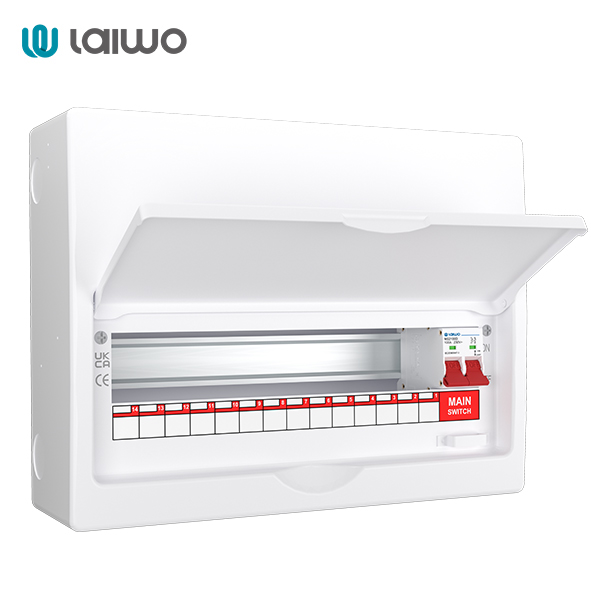
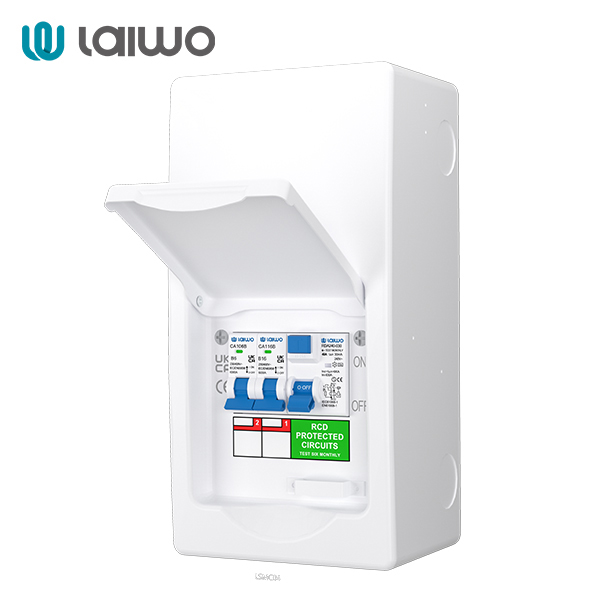
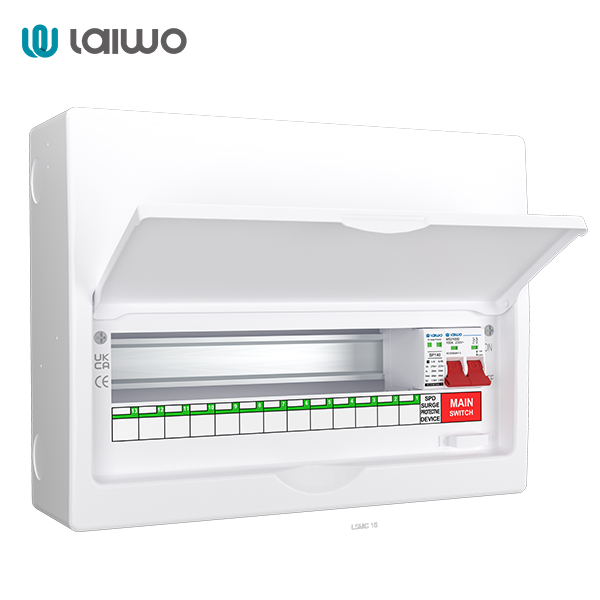
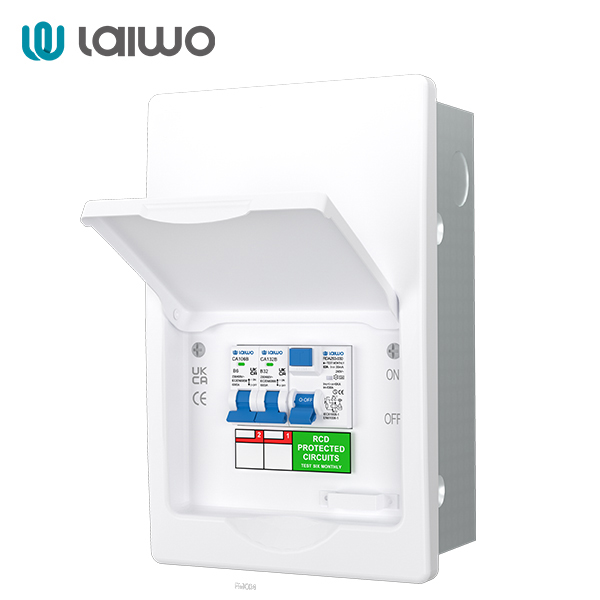
6. Designing an EV Charger Distribution Board
7. What Distributors, EPCs and Owners Really Need
8. How Each Protection Device Contributes to Safety
9. What Procurement Managers Should Ask Before Buying
10. Why Integrated Protection Solutions Simplify EV Projects
11. Final Thoughts & Next Steps
.jpg)
Growing Investment in EV Charging Infrastructure
Global EV adoption is accelerating, and charging infrastructure investment is following directly behind it. Procurement teams today are sourcing protection components for a broad range of project types:
Residential AC chargers (3.7 kW – 22 kW) for villas, apartments, and townhouses
Commercial charging stations at offices, malls, hotels and logistics hubs
Public fast-charging networks (DC 50 kW – 400 kW) along highways and in city centers
Fleet charging depots for buses, taxis, and last-mile delivery vehicles
System reliability in EV charging projects depends on coordinated protection, not on the charger alone. Four trends are pushing surge protection from "nice to have" into "mandatory":
High-value electronics — modern chargers contain expensive SiC/IGBT modules, communication boards, and metering ICs that are extremely sensitive to transients.
Continuous operation — public chargers are revenue-generating assets; every hour of downtime has a direct financial cost.
Remote monitoring & OCPP connectivity — networking interfaces (4G, Ethernet, RS-485) are common surge entry paths that are easily overlooked.
Warranty protection — most charger manufacturers require properly installed Type 2 SPDs to honor warranty claims after a surge event.
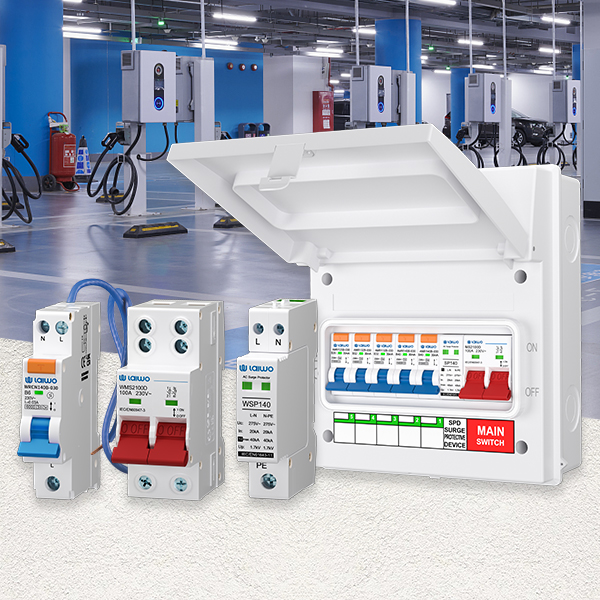
Typical Electrical Layout of an EV Charging Project
A well-engineered EV charging installation follows a clearly layered protection flow. Each layer has a specific role, and removing any one of them compromises the whole system:
|
Grid Supply |
|
Main Distribution Board |
|
Main Switch Disconnector |
|
Type 2 Surge Protective Device (SPD) |
|
MCB / RCBO |
|
EV Charger Distribution Board |
|
EV Charger |
The SPD is not a stand-alone device—it is the keystone of a coordinated protection strategy. To work properly, it must be matched with the right backup overcurrent device, located at the correct point in the panel, and bonded to a low-impedance earthing system. The relationships look like this:
SPD — diverts transient overvoltages to earth before they reach the charger
RCBO — provides combined earth-leakage and overload protection for the final EV circuit
MCB — handles short-circuit and overload on incoming or auxiliary circuits
Main Switch Disconnector — provides safe, visible isolation for maintenance and emergencies
Distribution Board — the mechanical and thermal platform that ties everything together
Earthing System — low-impedance path that determines whether the SPD can actually do its job
The lesson for procurement: never source surge protection in isolation. Always evaluate it together with the breakers, the enclosure and the earthing components it will operate alongside.
Learn More:
Understanding the Difference Between MCB, RCCB, and RCBO
What Is the Difference Between a Circuit Breaker and a Main Switch Disconnector?
Managing Multiple Protection Components
Multiple suppliers — different brands for SPD, RCBO, MCB and enclosures complicate logistics and after-sales support.
Compatibility issues — mismatched DIN rail spacing, terminal sizes or short-circuit ratings cause field rework.
Certification consistency — inconsistent IEC/CE documentation across vendors slows down project approvals.
Meeting Project Compliance Requirements
EV charging projects must satisfy multiple overlapping standards. Procurement teams should treat the following as a non-negotiable checklist when comparing suppliers:
|
Standard |
Scope |
|
IEC 61643 |
Surge Protective Devices for low-voltage systems |
|
IEC 61851 |
Electric vehicle conductive charging systems |
|
IEC 60364 |
Low-voltage electrical installations |
|
BS EN 61439 |
Low-voltage switchgear and controlgear assemblies (distribution boards) |
The cheapest BOM is rarely the cheapest project. Procurement managers should evaluate at least four cost dimensions before placing volume orders:
Initial purchase price — the only number most spreadsheets capture
Maintenance & spare-parts cost over a 10-year operating window
Downtime risk — lost revenue per offline charger per day
Warranty exposure — claim rates against the charger OEM when SPDs underperform
Surge sources are both external (direct and induced lightning) and internal (large motor switching, capacitor banks, utility re-closures). Without a properly rated Type 2 SPD at the charger panel, even moderate transients can punch through the charger's internal MOVs and destroy the LLC resonant stage or control board.
Nuisance tripping is one of the most common—and most expensive—complaints on EV sites. Typical root causes include:
Improper SPD coordination with the upstream backup fuse or MCB
Incorrect RCBO type — Type AC used where Type A or Type B is mandatory for DC fault currents
Poor grounding — high earth impedance amplifies transients and triggers leakage detection
Thermal stress from undersized busbars under continuous charger load
Loose wiring at terminals carrying high inrush currents
Insufficient surge protection causing repeated MOV degradation inside the enclosure
Inspectors increasingly reject EV installations missing a documented surge protection strategy: no Type 2 SPD at the dedicated EV board, no coordination with the upstream main, or no labelling of the SPD status indicator. A properly specified protection package eliminates 90% of inspection failures on the first visit.
Learn More:
How to Stop Your RCD from Tripping
Why RCBOs Are a Must-Have in Modern Distribution Boards
|
SPD Type |
Installation Location |
Primary Function |
Typical EV Application |
|
Type 1 |
Main service entrance / before main switch |
Discharge direct lightning current (10/350 µs) |
Buildings with external LPS or rooftop chargers |
|
Type 2 |
Sub-distribution / EV charger panel |
Protect against induced surges & switching transients (8/20 µs) |
Standard requirement for virtually all AC & DC chargers |
|
Type 3 |
At the equipment / inside the charger |
Fine protection for sensitive electronics |
Communication, metering and control boards |
Uc — Maximum continuous operating voltage — must be ≥ 1.1 × nominal system voltage
In — Nominal discharge current (8/20 µs) — typical 20 kA for EV Type 2 SPDs
Imax — Maximum discharge current — should match site exposure (40 kA typical)
Up — Voltage protection level — lower is better; target ≤ 1.5 kV for AC chargers
Iscr — Short-circuit withstand capability — must match panel prospective fault current
tA — Response time — typically < 25 ns for Type 2 MOV-based SPDs
Coordination means the SPD's backup fuse or MCB clears a failed SPD before the upstream RCBO trips—keeping the rest of the installation alive. A well-coordinated panel uses the SPD manufacturer's published backup fuse table and ensures cable lengths between SPD and main bar stay under 50 cm to minimise additive inductive voltage drop.
Main Switch Disconnector — sized to total charger load + 25% margin
Type 2 SPD — 20/40 kA with thermal disconnect and remote status contact
Type A or Type B RCBO — one per charger outlet, 30 mA sensitivity
MCB — for auxiliary circuits (lighting, ventilation, metering)
Dedicated Neutral & Earth bars — separated, with copper cross-section matching busbar rating
Faster installation on site — typical labour savings of 40–60%
Factory-tested wiring with documented torque values and routine test certificates
Reduced field errors and rework, especially for non-specialist contractors
Easier maintenance and spare-parts logistics across a fleet of sites
Learn More: Circuit Breaker for EV Charger – What You Need to Know
A focused, fast-moving SKU range covers the majority of residential and commercial EV charging projects without tying up working capital:
Type 2 SPDs (1P+N and 3P+N, 20/40 kA)
Type A RCBOs (16 A, 32 A, 40 A, 30 mA)
MCBs (B and C curves, 6 A – 63 A)
Main Switch Disconnectors (63 A – 125 A)
Pre-wired EV distribution boards (4-way, 8-way, 12-way)
Compliance-driven product selection backed by full IEC / CE / CB documentation
Coordinated protection design with verified discrimination and selectivity tables
Standardized component platforms across multiple sites to simplify O&M
Minimizing downtime — every offline charger is lost revenue and lost goodwill
Passing electrical inspections on the first attempt
Long-term reliability across 10+ years of service
Lower maintenance and lifecycle costs
Expandability — adding more chargers without re-engineering the protection scheme
Diverts lightning-induced surges to earth
Clamps switching transients from utility and load-side events
Detects earth-leakage currents that can injure users
Provides overload and short-circuit protection on the final EV circuit
Ideal as a one-device-per-charger solution
Overload protection for steady currents above rated value
Short-circuit protection with defined magnetic trip curves (B / C / D)
Visible, lockable isolation for maintenance
Emergency shutdown for the entire charging island
Houses and coordinates all protection devices in a single, pre-tested assembly
Simplifies procurement, installation, certification and after-sales support
Independent IEC test reports (IEC 61643 for SPDs, IEC 61009 for RCBOs)
CE / UKCA / CB certificates valid for the target market
RoHS & REACH declarations for material compliance
OEM / ODM services, including private labelling and custom configurations
Production capacity matched to your forecast and seasonal peaks
Realistic lead time and clear MOQ policy
Supply chain stability — dual sourcing of MOVs, gas-discharge tubes and contacts
100% factory routine testing with traceable serial numbers
Incoming material inspection (IQC) and statistical process control
Functional testing under simulated surge conditions
Learn Mroe: Why Certifications Matter for Distribution Boxes, Breakers, and Fuses
Instead of sourcing five or six categories of devices from five or six suppliers, leading distributors and EPC contractors increasingly favour integrated protection solutions that bundle SPDs, RCBOs, MCBs, main switch disconnectors and EV-ready distribution boards into a single, factory-coordinated package. The procurement benefits are concrete:
Guaranteed compatibility across components (mechanical, electrical and certification)
Up to 50% shorter installation time on site
Single point of contact for technical support and warranty
Simpler compliance documentation for inspectors and project owners
Lower total cost of ownership across the project lifecycle
Surge protection is only one part of a reliable EV charging system—but it is the part that protects every other part. The best-performing installations combine compliant SPDs, coordinated RCBOs and MCBs, properly designed distribution boards, and fully certified components into a single coherent protection architecture.
Whether you are equipping residential chargers, rolling out a commercial network, or building public DC fast-charging hubs, choosing the right protection system from day one reduces downtime, improves safety, simplifies inspections, and significantly lowers total cost of ownership over the project's lifetime.
We help distributors, importers and EPC contractors specify and source complete EV charging protection packages—SPDs, RCBOs, MCBs, main switches and pre-populated distribution boards—engineered to IEC 61643, IEC 61851 and IEC 60364.
Download our full EV Protection Catalog
Request a project-specific quotation
Talk to us about OEM / ODM private-label solutions
Contact our project engineering team for a same-day technical consultation.