Next: Bottle Fuse vs Cylindrical Fuse: Which One Should You Use?



A comprehensive B2B technical guide comparing ceramic vs plastic fuse holders for engineers, procurement, and quality managers evaluating IEC 60269 compliance.
TABLE OF CONTENTS
Why Fuse Holder Material Matters More Than Most People Think
What Is a Ceramic Fuse Holder?
What Is a Plastic Fuse Holder?
Ceramic vs Plastic Fuse Holders: Technical Comparison
Compliance Requirements Engineers Should Verify
Ceramic vs Plastic Fuse Holders in Solar PV Systems
Which Fuse Holder Should Procurement Managers Choose?
How Quality Managers Evaluate Fuse Holder Reliability
Common Selection Mistakes That Cause Fuse Holder Failures
Selection Guide: Which Fuse Holder Should You Use?
Why Many OEM Manufacturers Prefer Certified Ceramic Fuse Holders
Frequently Asked Questions (FAQ)
In the vast landscape of electrical engineering and system architecture, fuse holder failures are often overlooked during system design. Many engineers spend countless hours calculating optimal short-circuit ratings, selectively coordinating fuses, and simulating load profiles, while treating the fuse holder as a mere mechanical accessory.
However, modern electrical environments have become increasingly demanding. In systems such as commercial distribution boards, heavy-duty industrial control panels, solar PV combiner boxes, and high-capacity battery energy storage systems (BESS), the fuse holder can rapidly become a critical weak point if improperly specified.
Common field failures directly attributed to improper fuse holder selection include:
Melted fuse holders due to sustained thermal overload.
Loose fuse contacts leading to catastrophic temperature rise.
Thermal degradation of thermoplastic materials over time.
Arc damage during fault clearing or improper maintenance.
Significant maintenance downtime resulting in substantial financial loss.
For engineering directors and procurement teams, choosing between ceramic and plastic fuse holders is not just a matter of unit price; it directly impacts safety, regulatory compliance, long-term reliability, and overall lifecycle cost. This comprehensive guide compares both options from technical, compliance, and application perspectives to help you make the right engineering decision.
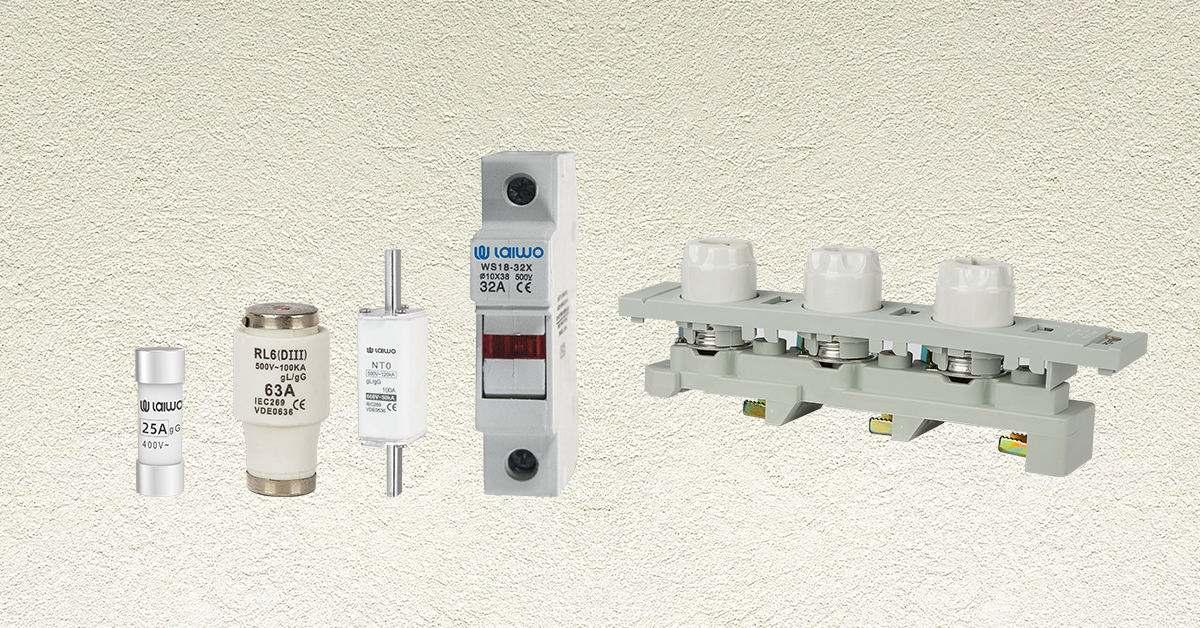
When designing an electrical enclosure, many engineers meticulously focus on the fuse rating, breaking capacity (kA), and voltage rating. Unfortunately, they frequently ignore critical holder-specific parameters such as contact temperature rise, long-term insulation performance, and true flame resistance.
A fuse is designed to generate heat and melt a highly calibrated element to clear a fault. The holder must safely dissipate this heat. If the material cannot handle the thermal stress, a fuse holder failure can easily occur before the fuse itself operates, leading to panel fires or catastrophic equipment loss.
Evaluating field failure data reveals distinct patterns in how fuse holders degrade. Overheating is typically caused by loose terminals, poor contact pressure over time, or improper cable torquing during installation. Plastic Deformation is a chronic issue, common in overloaded distribution boards and outdoor enclosures subjected to high ambient heat. Finally, Arc Damage occurs particularly during high-energy fault clearing or improper fuse replacement under load, instantly destroying inferior housing materials.
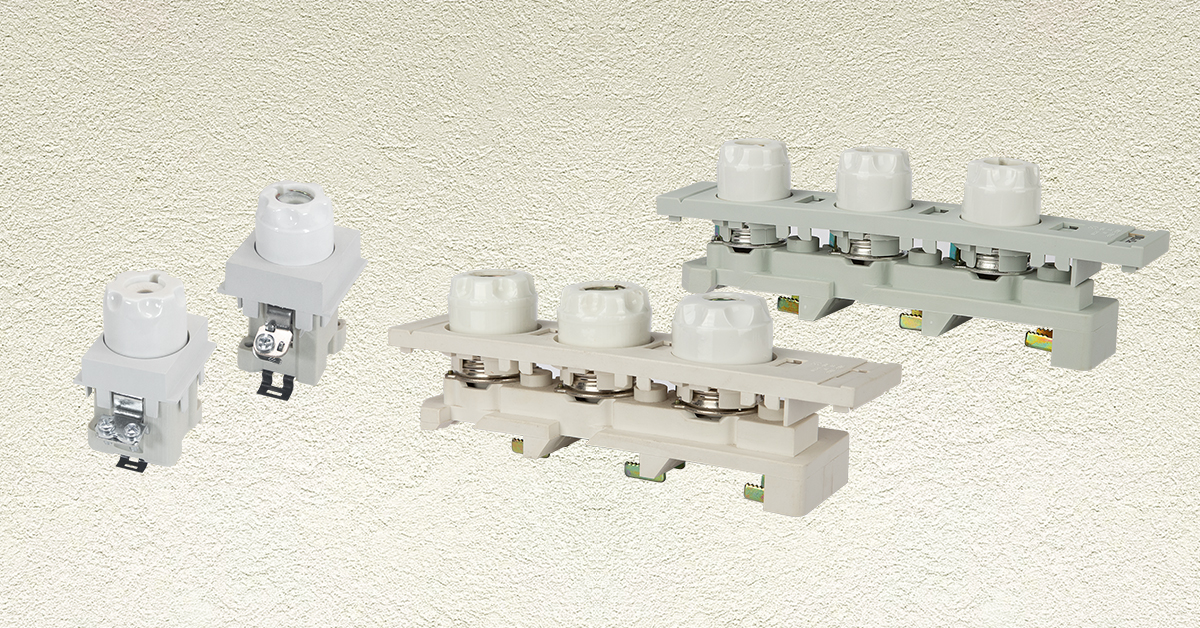
Ceramic fuse holders are manufactured using advanced industrial ceramics, most commonly steatite ceramic or high-grade electrical porcelain. Steatite is favored for its exceptional mechanical strength and minimal shrinkage during the firing process. These materials naturally possess inherently high dielectric strength, ensuring complete electrical isolation even under extreme voltage transients.
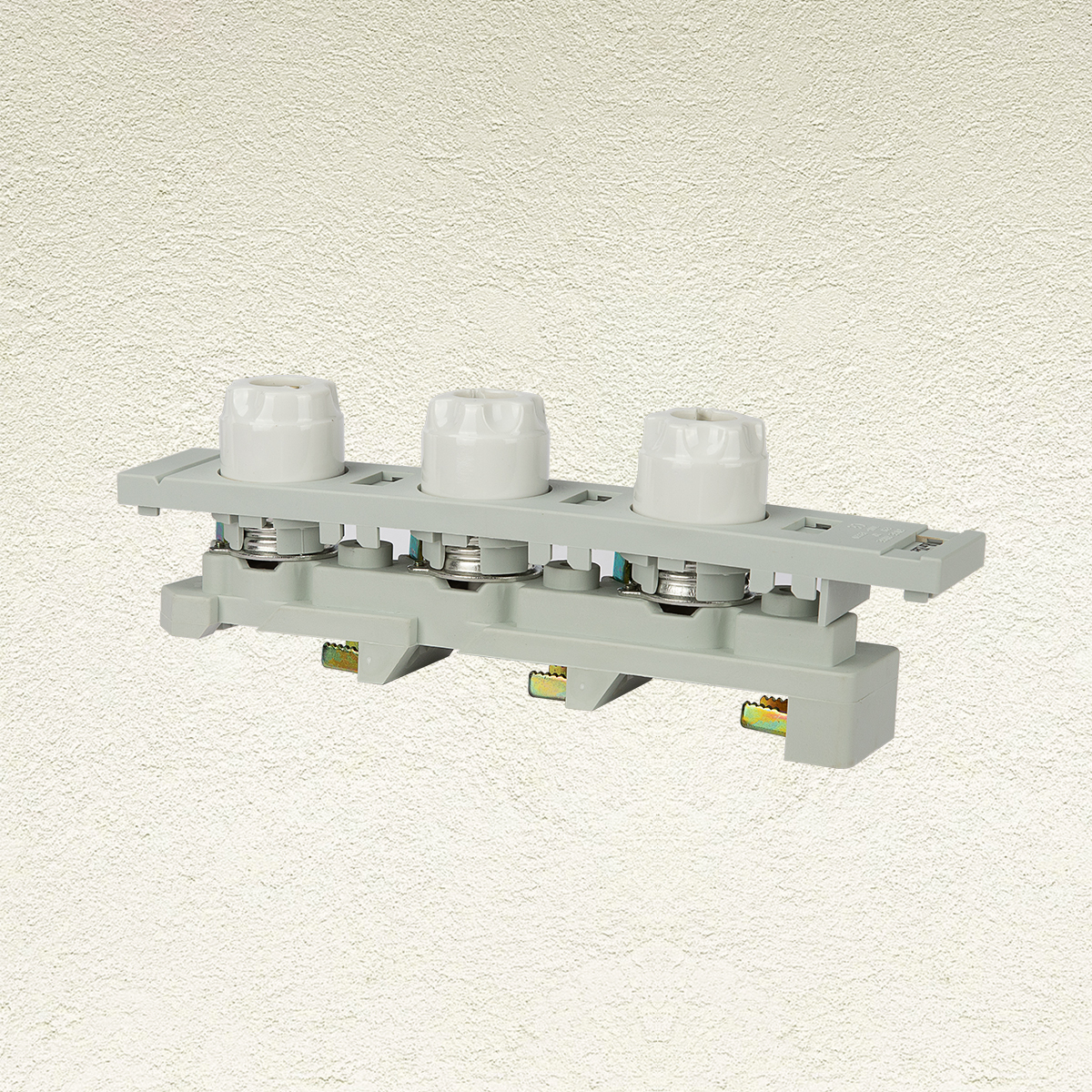
The defining trait of a ceramic holder is its unmatched thermal performance. The operating temperature range of industrial ceramic far exceeds any commercially viable thermoplastic. Ceramic offers extreme continuous heat resistance, does not melt, and boasts incredible arc resistance. When a high-energy fault occurs, the ceramic body will not char, warp, or contribute fuel to an electrical fire.
Due to these robust characteristics, ceramic fuse holders are universally specified in demanding environments. Examples include heavy-duty industrial switchgear, motor control centers (MCC) handling large inductive loads, utility-scale photovoltaic (PV) combiner boxes, and Battery Energy Storage Systems (BESS) where DC fault energy is immense.
Plastic fuse holders utilize engineered thermoplastics specifically formulated for electrical applications. The most common materials include Polyamide 66 (PA66), Acrylonitrile Butadiene Styrene (ABS), Polycarbonate (PC), and heavily modified flame-retardant nylon blends designed to meet stringent fire safety codes.
Plastic components dominate the low-to-medium power electrical sector for several compelling reasons. They are exceptionally lightweight, allowing for easier panel construction. They offer a significantly lower initial cost due to injection molding efficiencies. Furthermore, the easier manufacturing process allows for complex, modular, and DIN-rail mountable designs that streamline installation for panel builders.
Plastic fuse holders are perfectly suited for environments with controlled temperatures and predictable loads. Examples include residential consumer units, standard Miniature Circuit Breaker (MCB) distribution boards, and low-current automation control panels where extreme thermal stress is highly unlikely.
Key Engineering Insight: The choice between ceramic and plastic fundamentally alters the thermal management profile of your electrical enclosure.
| Property | Ceramic | Plastic |
|---|---|---|
| Continuous Heat Resistance | Higher (often >1000°C) | Lower (typically limits around 130°C to 150°C) |
| Deformation Risk | Very Low (zero melting point) | Moderate (subject to creep and softening) |
| Thermal Aging | Excellent (no embrittlement over time) | Medium (can become brittle from UV or long-term heat) |
Arc resistance is critical during fault interruption events. While the fuse contains the primary arc, the holder must withstand external flashovers or energy release. In industrial environments or during improper fuse replacement under load, plastic materials can carbonize, creating a conductive path that leads to phase-to-phase shorts. Ceramic is naturally inorganic, meaning it cannot carbonize and retains its full insulating properties even after direct exposure to electrical arcing.
When comparing mechanical robustness, plastic typically offers better initial impact resistance, as ceramic can crack if subjected to blunt force trauma or excessive torque during installation. Furthermore, high-quality engineering plastics offer excellent vibration resistance, making them ideal for transit or machinery panels. However, ceramic excels in long-term dimensional stability, ensuring that contact pressure remains constant over decades of thermal cycling.
The expected life of these components varies drastically by application. In standardized indoor systems, both materials will easily outlast the panel lifecycle. However, in outdoor systems and massive solar installations subjected to intense daily thermal cycling, UV radiation, and continuous heavy loads, ceramic holders offer a significantly longer operational lifespan.
Engineers must look beyond the purchase price. The initial cost of plastic is undeniably lower. However, when factoring in maintenance costs related to periodic retorquing, replacement costs for heat-degraded units, and the overall lifecycle cost of unexpected downtime, ceramic often presents a superior ROI in mission-critical infrastructure.
Important: Regardless of material choice, specifying uncertified fuse holders in B2B projects exposes your firm to massive liability and invalidates system warranties.
Global regulatory alignment is non-negotiable for OEM panel builders. Key standards include:
IEC 60269: The definitive international standard governing low-voltage fuses and fuse holders.
IEC 61439: Outlines the specific requirements for low-voltage switchgear and controlgear assemblies (Distribution boards).
IEC 60947: Governs industrial switchgear, controlgear, and disconnectors.
For plastic holders, proving flame retardancy is vital. Components must meet the UL94 V0 rating, which mandates that burning must stop within 10 seconds and no flaming drips are allowed. Additionally, European standards heavily rely on Glow wire testing to simulate the thermal stress of a glowing wire or component in close proximity to the holder housing.
Compliance isn't just a label; it requires rigorous empirical data. Temperature rise test reports are critical for project approval. These tests verify that when running at rated current, the temperature at the holder's contact terminals will not exceed safe thresholds that could damage connected cables or busbars.
Solar arrays present a uniquely hostile environment for electrical components. Unlike residential loads that fluctuate, PV systems subject components to continuous maximum current for several hours every day. Combined with extreme ambient rooftop heat inside sealed, IP65-rated enclosures, the localized temperature rise is tremendous. Furthermore, the risk of sustained DC arcs makes fault clearance exceptionally violent.
Given these parameters, many tier-one solar inverter and combiner box manufacturers default to ceramic bodies. Ceramic provides vastly superior natural heat dissipation, ensuring the internal fuses operate according to their specific time-current curves without being skewed by ambient holder heat. This guarantees long-term reliability and secure DC fault protection.
Yes, but with strict caveats. Plastic fuse holders can be used in solar applications, but only when they are explicitly PV certified (typically under specific UL or IEC photovoltaic standards), rigorously temperature tested for enclosed DC environments, and demonstrably IEC compliant with advanced high-temperature thermoplastic blends.
A common pitfall in electrical procurement is the failure to look beyond the bill of materials. Many buyers compare unit price only, favoring cheap, uncertified plastic imports. Instead, procurement must calculate the Total Cost of Ownership (TCO), which includes factoring in maintenance cost, replacement frequency, and the catastrophic financial impact of warranty claims or product recalls caused by premature panel fires.
Evaluating a supplier requires a holistic approach. Procurement managers should assess Minimum Order Quantities (MOQ) and lead time flexibility. More importantly, they must verify certification availability upfront and audit the supplier's internal quality systems to ensure lot-to-lot consistency.
Before issuing a PO, use this critical checklist:
Are official, third-party IEC test reports available for review?
Can you provide a verified Temperature rise report?
Is the product RoHS compliant?
Is the product REACH compliant?
Can you provide full material certification and traceability?
Quality directors are the gatekeepers of brand reputation. They must mandate strict compliance with global directives. Required certifications often include IEC (International), CE (European Union), UKCA (United Kingdom), and participation in the IECEE CB Scheme for streamlined global market access.
A certified design is meaningless without manufacturing discipline. Robust quality control includes strict incoming material inspection (verifying polymer grades or ceramic purity), rigorous terminal torque testing to ensure screw threads don't strip under load, and batch-level thermal aging tests to guarantee long-term performance.
For large-scale OEM projects, full backward traceability is mandatory. Quality managers must ensure that if a field failure occurs, the supplier can trace the specific fuse holder back to the exact manufacturing date, machine operator, and raw material batch.
Selecting a 32A fuse holder merely because the circuit draws 30A is a recipe for disaster. Derating factors based on enclosure size, grouping, and continuous load profiles must be applied.
Panel interiors routinely exceed 50°C. If a plastic fuse holder is rated for a 40°C ambient maximum, its thermal limits will be rapidly breached, leading to plastic deformation.
Using a fuse with poor contact geometries inside a generic holder reduces contact surface area, multiplying resistance and exponentially increasing localized heating.
Deploying cheap, residential-grade plastic holders in a heavy industrial panel subjected to high vibration, harsh chemicals, and constant heavy loads will inevitably result in mechanical failure.
Recommendation: Plastic. Standard commercial and residential distribution boards benefit greatly from the lightweight, DIN-rail friendly, and cost-effective nature of engineered plastics, provided they are fully certified and properly rated.
Recommendation: Ceramic. Industrial environments demand extreme durability. Ceramic provides the better thermal performance necessary for continuous, heavy inductive loads.
Recommendation: Ceramic or high-end PV-certified plastic holders. Due to extreme continuous thermal loading and DC voltages, ceramic is highly preferred to mitigate fire risks.
Recommendation: High-performance ceramic holders. The immense short-circuit energy potential of modern lithium-ion BESS architectures requires the highest possible arc and thermal resistance.
When system integrity is non-negotiable, top-tier engineering firms trust established manufacturers. Integrating LAIWO Fuse Holders into your supply chain ensures strict adherence to IEC 60269 specifications.
Whether you are designing a high-capacity commercial distribution board or a utility-scale PV string combiner, specifying a LAIWO fuse holder—particularly their advanced PV fuse holder lines—guarantees exceptional low-voltage protection. By standardizing on premium, verified distribution board components from LAIWO, OEMs drastically reduce their warranty liabilities and elevate the inherent safety of their overall electrical architectures.
To summarize the general industry consensus for procurement and engineering teams:
| Application | Recommended Holder |
|---|---|
| Residential DB | Plastic |
| Commercial Panel | Plastic / Ceramic |
| Industrial Switchgear | Ceramic |
| Solar PV | Ceramic |
| BESS | Ceramic |
In conclusion, while plastic fuse holders significantly reduce initial capital cost and simplify standard panel assembly, ceramic fuse holders consistently deliver better thermal performance, absolute compliance confidence, and unparalleled long-term reliability in highly demanding electrical systems. Evaluate your specific thermal environment, strictly adhere to IEC 60269, and consult with certified manufacturers to ensure maximum system protection.
1. Are ceramic fuse holders always better than plastic ones?
Not necessarily. While ceramic fuse holders excel in high-temperature, high-arc, and demanding industrial applications (like solar PV and BESS), plastic fuse holders are perfectly adequate, more cost-effective, and lighter for standard residential and light commercial distribution boards, provided they meet required safety certifications like IEC 60269.
2. Which IEC standard governs fuse holders?
IEC 60269 is the primary international standard for low-voltage fuses and fuse holders. Other relevant standards include IEC 61439 for distribution boards and IEC 60947 for industrial switchgear.
3. Can I use plastic fuse holders in solar PV systems?
Yes, but only if they are specifically certified for Photovoltaic (PV) applications, thoroughly temperature tested for high continuous loads, and fully IEC compliant. However, many engineers prefer ceramic for PV due to the extreme continuous thermal stress and DC arc risks.
4. What temperature can ceramic fuse holders withstand?
High-quality industrial ceramic fuse holders, particularly those made from steatite ceramic, can withstand continuous operating temperatures often exceeding 1000°C without mechanical degradation, melting, or losing structural integrity.
5. What does UL94 V0 mean for plastic fuse holders?
UL94 V0 is a strict flame retardancy standard indicating that burning stops within 10 seconds on a vertical specimen, and drips of particles are not allowed to be inflamed. This ensures the plastic will not sustain or spread a fire during a fault.
6. How do I verify a fuse holder is genuinely IEC compliant?
Procurement and quality teams should request the full IEC test reports from certified third-party testing laboratories (like TUV, VDE, or UL), check for proper physical markings (CE, UKCA, CB scheme), and audit the supplier's traceability and incoming material inspection records.
7. Why do fuse holders fail before the fuse itself?
Fuse holders often fail due to localized temperature rise caused by loose terminals, poor contact pressure, or inadequate heat dissipation. This localized heat can melt a plastic holder or cause thermal degradation before the fuse reaches its operational overcurrent threshold.
8. What is the typical service life of a quality ceramic fuse holder?
In a well-designed and properly maintained industrial or solar system, a high-quality ceramic fuse holder can easily last 20 to 30 years, matching the lifecycle of the overall switchgear or PV installation.
Ensure the safety and longevity of your next major electrical project. Contact the technical engineering team at LAIWO today to discuss our full range of fully certified ceramic and PV fuse holders designed for modern industrial applications.