

1. What Is a Surge Protection Device (SPD)?
2. Why Install SPD in the Distribution Board Instead of Elsewhere?
3. What Risks Exist Without SPD in a Distribution Board?
4. Why Electricians Prefer SPD Installation in Distribution Boards
5. Common Mistakes When Installing Surge Protection Devices
6. How to Choose the Right SPD for a Distribution Board
7. Why Installing SPD in Distribution Boards Saves Long-Term Cost
8. Final Thoughts: SPD in Distribution Boards Is Essential Protection
9. Frequently Asked Questions (FAQ)
Modern electrical systems are increasingly sensitive to transient overvoltages. As industrial facilities and commercial buildings integrate more sophisticated electronic components, the vulnerability of these systems to power disturbances grows exponentially. Transient overvoltages are sudden, extremely fast spikes in electrical potential that can be caused by a variety of external and internal factors.
These overvoltages are commonly caused by:
Lightning strikes occurring near the facility or power lines
Utility switching operations on the electrical grid
Starting and stopping of heavy motor loads
Internal switching surges from machinery within the facility
These sudden voltage spikes carry enough energy to severely damage downstream assets, including sensitive electronic equipment, circuit breakers, intricate control devices, and high-end appliances. Installing a Surge Protection Device (SPD) inside the distribution board is widely recognized by engineers and electrical standards as one of the most effective ways to protect the entire electrical installation from these destructive events.
Without adequate SPD protection, even a brief surge lasting microseconds can lead to catastrophic equipment failure, expensive operational downtime, and a significantly elevated fire risk due to insulation breakdown.
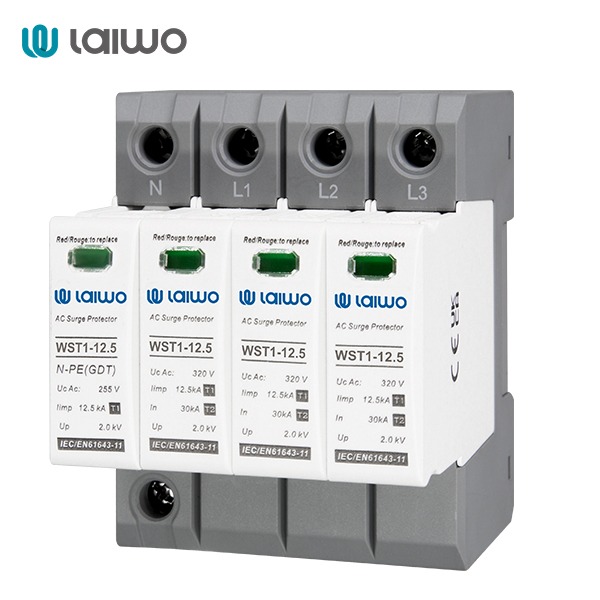
At its core, a surge protection device is a critical component designed to safeguard electrical systems from transient overvoltages. Its primary function is to detect overvoltage spikes instantaneously, divert the potentially destructive surge current safely to earth, and thereby protect downstream electrical equipment from experiencing voltage levels beyond their withstand capacity. By functioning in parallel with the electrical supply, it acts as an invisible protective barrier, clamping the voltage to a safe level before it can propagate through the system.
While lightning is the most notorious source, it is not the only cause. Common causes include direct or indirect lightning strikes, the switching of heavy inductive loads (such as large industrial motors or HVAC systems), utility transformer switching operations, and broader grid disturbances. Notably, studies show that a significant percentage of damaging surges are generated internally. Even routine internal switching events can generate damaging surges that degrade sensitive components over time.
A common misconception is that standard circuit breakers provide comprehensive protection. However, Miniature Circuit Breakers (MCBs) and Residual Current Breaker with Overcurrent (RCBOs) are designed primarily to protect against overloads, short circuits, and earth leakage. Because transient overvoltages occur in microseconds—far faster than the reaction time of a standard mechanical breaker—they simply pass through unhindered. They do not protect against transient surges.
This is why SPDs are essential. They provide the specialized, high-speed response necessary to manage voltage transients that traditional overcurrent protection cannot handle.
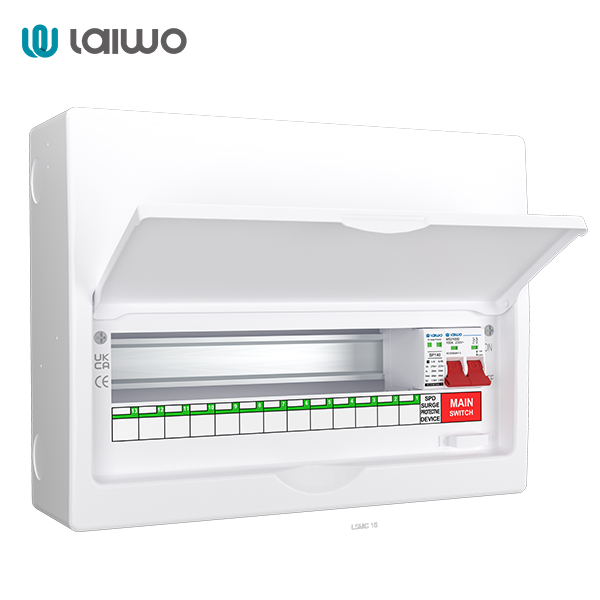
The distribution board serves as the central nervous system of any electrical installation. It is the primary node where incoming power is split and distributed to lighting circuits, socket circuits, dedicated appliances, and sub-panels. By strategically installing the SPD at this main hub, you effectively cast a protective umbrella over the entire network. Installing an SPD here protects all downstream circuits at once, ensuring comprehensive coverage from a single point.
When it comes to surge protection, location dictates efficacy. The earlier the surge is intercepted and diverted to earth, the better. Early diversion means there is significantly less electrical stress exerted on downstream equipment and a heavily reduced chance of insulation damage within the facility's wiring. Installing the SPD at the distribution board stops surges at the gateway before they have the opportunity to spread deep into branch circuits and reach vulnerable devices.
From an operational standpoint, centralized protection is vastly superior to relying solely on point-of-use protectors. Instead of attempting to protect individual devices separately—which is often impractical and disjointed—one properly sized SPD at the distribution board protects the entire panel. This centralized approach leads to easier maintenance, straightforward inspection routines, and ultimately a lower total cost of ownership. This is especially useful in commercial installations where the sheer volume of sensitive equipment makes individual protection unfeasible.
In the absence of an SPD, modern infrastructure is highly vulnerable. Voltage surges can irreparably damage Programmable Logic Controllers (PLC systems) operating factory floors, sophisticated smart appliances in modern offices, delicate inverters in solar installations, and high-power EV chargers. The microprocessors within these devices operate on very low voltages and have minimal tolerance for transients. When these components fail, the replacement and reprogramming costs are often extraordinarily expensive.
The damage caused by surges is not always immediate or visible. Even if equipment does not fail instantly following a surge event, repeated low-level surges systematically weaken the dialectic insulation within wires, motors, and circuit boards. Consequently, components age faster and fail prematurely. This leads to hidden long-term damage that manifests as unexplained glitches, erratic system behavior, and eventual hardware death long before the expected end of life.
Perhaps the most severe consequence of unprotected surges is the threat to life and property safety. Massive voltage spikes or repeated insulation degradation can cause severe overheating within electrical enclosures, total insulation breakdown, and dangerous arcing faults. When an electrical arc occurs, it generates intense heat capable of igniting surrounding materials. Without an SPD to clamp these overvoltages, the fire risk increases significantly across the installation.
For B2B operations, time is money. For businesses, surge damage translates directly to system interruption, exorbitant emergency repair costs, and massive lost productivity. When a critical control panel is taken offline by a transient surge, entire production lines can halt. This unexpected downtime is a major concern for industrial users, making the cost of an SPD negligible compared to the financial impact of a single severe surge event.
From a contractor's perspective, efficiency is key. Installing the SPD directly in the distribution board allows for exceptionally short wiring paths, which is crucial for the SPD's performance. It promotes an organized protection layout that integrates seamlessly with existing DIN rails. Furthermore, a centralized location facilitates easier inspection and commissioning. This streamlined process reduces installation time and minimizes labor costs for the electrical contractor.
SPDs are sacrificial devices; over time, they absorb surges and eventually require replacement. When installed centrally, if an SPD fails or its end-of-life indicator turns red, replacement is straightforward. The maintenance technician only needs to access one panel, and often, only the plug-in module needs swapping. There is no need to trace or modify intricate branch circuits. This greatly improves serviceability and reduces maintenance complexity.
Proper electrical design requires that all protective devices work in harmony. An SPD installed in the main board can be precisely coordinated with upstream and downstream Miniature Circuit Breakers (MCBs), Residual Current Circuit Breakers (RCCBs), and RCBOs. This careful coordination ensures that the SPD operates correctly without causing nuisance tripping of RCDs, thereby improving the overall system reliability and ensuring continuous power delivery.
A frequent installation error is placing the SPD at the end of a long cable run within the panel. Long wiring distances significantly reduce the SPD's effectiveness by adding inductive voltage drops to the clamping voltage. To ensure maximum efficacy, the SPD should be installed as close as physically possible to the main incoming supply in the board, keeping connecting leads as short and straight as possible (ideally under 0.5 meters total).
Selecting an inappropriate class of SPD leaves systems vulnerable. Common SPD types include:
Type 1: Designed for lightning protection at the main incoming point, especially if the building has an external lightning protection system.
Type 2: The standard for distribution board protection against switching surges and indirect lightning.
Type 3: Point-of-use protection installed near specific sensitive equipment as a final defense.
Using the wrong type—such as a Type 3 at the main incomer—drastically reduces protection performance and will likely result in the SPD failing violently during a major surge.
An SPD is only as good as its connection to earth. Without proper grounding, the massive surge current cannot be diverted effectively away from the installation. High impedance in the earthing system will cause the surge voltage to elevate the potential of the entire grounding network, posing severe risks. Ignoring earthing fundamentals makes the SPD completely ineffective.
Depending on the manufacturer's instructions and the prospective short-circuit current of the installation, an SPD must often be coordinated with a dedicated backup MCB or fuse. If the SPD fails short-circuit, this overcurrent device safely disconnects it from the supply. Failing to provide this backup protection endangers the SPD itself and can lead to panel damage if the SPD structurally fails under extreme stress.
For procurement professionals and panel builders configuring standard distribution boards, the choice is generally straightforward. For most distribution boards, particularly those in sub-distribution roles or buildings without direct lightning exposure, a Type 2 SPD is the standard choice. It provides the necessary robust clamping against the most frequent types of voltage transients.
It is imperative to choose an SPD according to the specific network parameters, such as a 230V single-phase system or a 400V three-phase system. Specifying the correct Maximum Continuous Operating Voltage (Uc) is critical. Selecting a wrong voltage rating—such as using a 275V SPD on a 400V line-to-line system without a neutral—may cause immediate and catastrophic failure of the device.
When evaluating data sheets, important ratings include the Nominal Discharge Current (In) and the Maximum Discharge Current (Imax). The 'In' rating indicates the surge current the device can handle repeatedly, while 'Imax' defines the absolute maximum single surge it can survive. Generally, a higher surge capacity means better protection and a longer operational lifespan in environments prone to frequent disturbances.
Physical and electrical compatibility must be confirmed before purchase. Consider the available mounting space on the DIN rail, the required pole configuration (e.g., 1P+N, 3P+N), and the coordination with existing upstream breakers. Ensuring these factors align guarantees a smooth, compliant installation process for the contractor.
The financial justification for SPD installation is overwhelmingly positive. The upfront cost of one high-quality SPD is infinitesimally lower than the cost of replacing damaged critical assets such as commercial inverter boards, complex factory automation systems, or bespoke HVAC control devices. An SPD acts as a low-cost insurance policy for high-value infrastructure.
By filtering out the constant barrage of minor surges, an SPD drastically reduces the wear and tear on electrical equipment. Fewer surge-related failures mean there are fewer emergency service calls required, less reactive downtime for the facility, and ultimately a much lower overall maintenance budget for the lifetime of the installation.
In B2B environments, reliability is a core metric. Reliable, well-protected systems improve the end-user's confidence in the electrical infrastructure. Furthermore, it reflects highly on the installation quality provided by the contractor, ensuring robust long-term performance that minimizes warranty claims and solidifies professional reputations.
In today's technology-driven industrial and commercial landscapes, installing surge protection devices in distribution boards is no longer an optional upgrade—it is a fundamental, essential component of basic electrical safety and reliability.
Implementing an SPD strategy robustly helps to protect sensitive downstream circuits, prevent catastrophic equipment failure, reduce the severe risk of electrical fires, and dramatically improve overall system reliability. The initial investment in surge protection yields massive dividends in operational stability.
For electricians, contractors, panel builders, and procurement buyers sourcing electrical components: A properly installed, accurately specified Type 2 SPD in the distribution board is unequivocally one of the smartest investments you can make in electrical protection. Protect your assets, ensure compliance, and minimize downtime by prioritizing comprehensive surge protection today.
Q1: Can I install a Type 3 SPD in the main distribution board?
No. Type 3 SPDs have low discharge capacities and are designed only for point-of-use protection near sensitive devices. You should install a Type 1 or Type 2 SPD in the main distribution board to handle higher surge energies safely.
Q2: How often should an SPD in a distribution board be replaced?
SPDs do not have a fixed lifespan in years; their life depends on the frequency and magnitude of surges they absorb. Most modern SPDs feature visual indicators (often turning from green to red). When the indicator shows red, the protective module has sacrificed itself and must be replaced immediately.
Q3: Do I need a separate circuit breaker for my SPD?
In most commercial installations, yes. A backup overcurrent protection device (like an MCB or fuse) is required to disconnect the SPD safely if it fails short-circuit. Always refer to the SPD manufacturer's specific guidelines regarding the required backup breaker size.
Q4: Will an SPD protect my equipment from a direct lightning strike?
A Type 1 SPD at the main incoming board is designed to handle the massive energy of a direct lightning strike (tested with a 10/350µs waveform). However, for complete protection, a coordinated approach using Type 1 at the incomer and Type 2 at sub-boards is required to clamp the voltage down to safe levels for electronics.
Q5: Why is cable length so important when wiring an SPD?
During a high-frequency surge, the impedance of the connecting cables causes a voltage drop. If the cables are too long, this voltage drop adds to the SPD's clamping voltage, resulting in a higher total voltage reaching the equipment. Keeping total lead lengths under 0.5 meters ensures maximum protection.